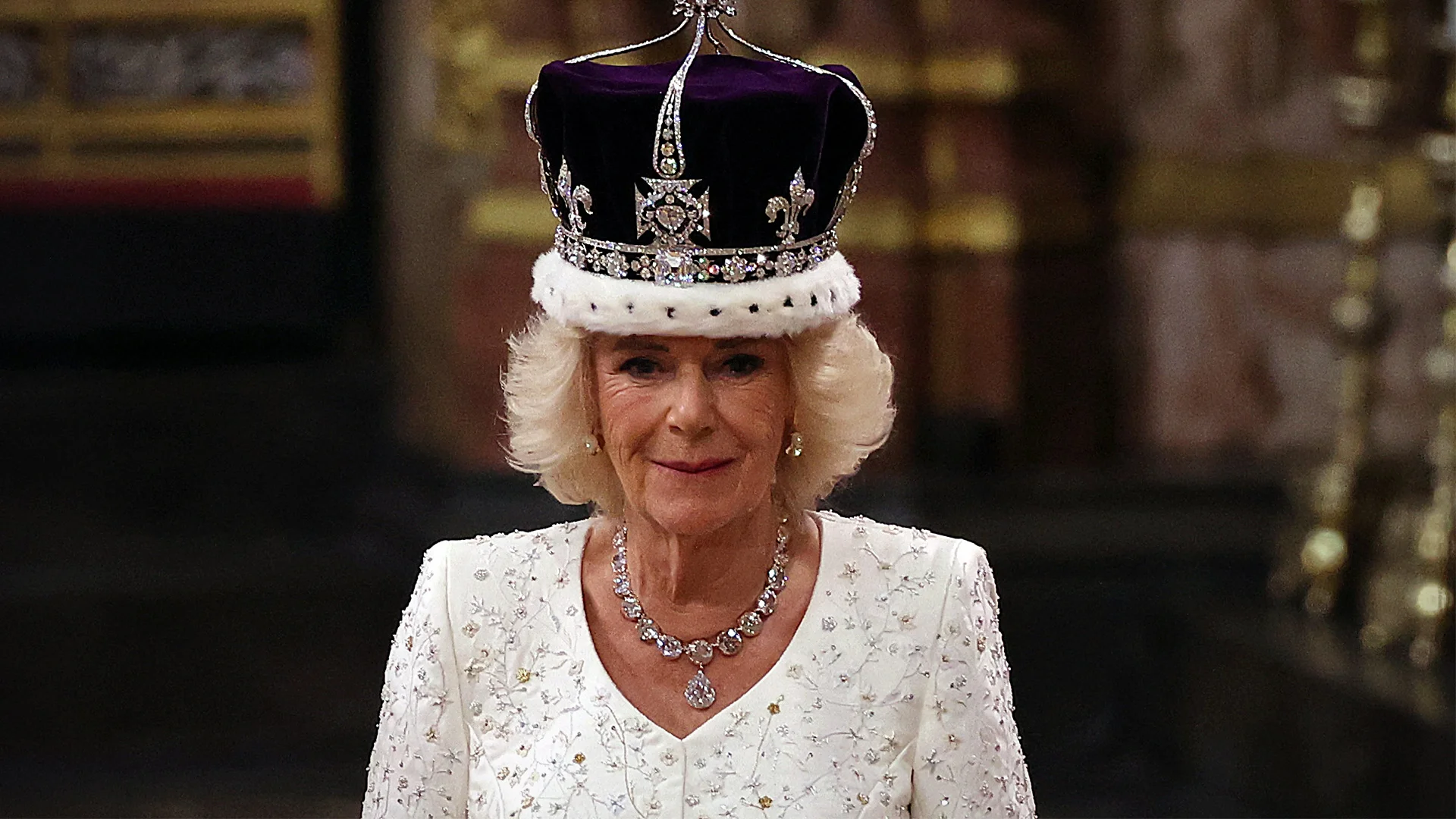
Queen Camilla: The Journey of a Consort

quartetoolinda.com – Queen Camilla, the wife of King Charles III, ascended to her new role following the death of Queen Elizabeth II and the coronation of her husband on May 6, 2023. Her journey from the wife of the Prince of Wales to becoming Queen Consort has been marked by significant public scrutiny, personal growth, and a steadfast dedication to charity work and royal duties. Today, Queen Camilla stands as an influential and respected figure within the British monarchy.

Early Life and Relationship with Charles

Camilla Rosemary Shand was born on July 17, 1947, into an aristocratic British family. She grew up in East Sussex and was educated at Dumbrells School and Queen’s Gate School in London before attending finishing schools in Switzerland and France. In the early 1970s, Camilla met Charles, then the Prince of Wales, and the two began a close relationship. Although their romance ended before Charles married Lady Diana Spencer, they maintained a lifelong friendship.

Camilla married Andrew Parker Bowles in 1973, and they had two children, Tom and Laura, before divorcing in 1995. Her relationship with Prince Charles reignited during the 1990s, and despite considerable public and media attention, the couple eventually married on April 9, 2005. Their marriage signaled a new chapter for both Charles and Camilla, and over time, Camilla gained acceptance as an integral part of the royal family.

Role as Duchess of Cornwall

Upon her marriage to Charles, Camilla took on the title of Duchess of Cornwall, stepping into her new role with grace and commitment. Over the years, she became a dedicated royal figure, championing causes close to her heart. Among her many interests are literacy, animal welfare, domestic violence prevention, and support for the elderly.

Camilla became the patron or president of several charitable organizations, including the National Literacy Trust and the Royal Osteoporosis Society, and has actively raised awareness on issues such as sexual assault and violence against women. Her advocacy work has earned her widespread respect and has allowed her to forge her own identity within the royal family, separate from her husband’s status.

Transition to Queen Consort

Camilla’s path to becoming Queen Consort was not without its challenges. For many years, her public image was shaped by her relationship with Charles during his marriage to Princess Diana. However, in recent years, public opinion has shifted significantly, with Camilla earning recognition for her tireless charitable work and her support of King Charles III.

Before her passing, Queen Elizabeth II expressed her “sincere wish” that Camilla would be known as Queen Consort when Charles became king, solidifying Camilla’s place in the future of the monarchy. This endorsement by the late queen marked a pivotal moment in Camilla’s public life, as it highlighted her acceptance within the royal fold.

Since assuming the title of Queen Consort, Camilla has continued her royal duties, maintaining a schedule of public appearances, charity events, and ceremonial responsibilities. Her steady presence and dedication to her role have helped her establish herself as a trusted and respected figure within the monarchy.

Queen Camilla’s Role Today

As Queen Consort, Camilla has remained focused on her work with charitable organizations and has continued to be an advocate for issues such as domestic violence and literacy. She has also shown a deep commitment to supporting her husband, King Charles III, in his duties as monarch. Together, they represent the continuation of the British royal tradition, blending respect for the past with an openness to change.

Camilla’s role as Queen Consort is largely ceremonial, but she brings with her a wealth of experience, both from her years of public service and her personal journey within the royal family. She has forged strong relationships with other members of the royal household and is seen as a stabilizing presence in times of transition.

The Legacy of Queen Camilla

Queen Camilla’s journey from the Duchess of Cornwall to Queen Consort is a testament to her resilience, adaptability, and quiet strength. While her public life has not always been easy, she has earned respect for her unwavering support of King Charles III and her dedication to causes that matter to her.

As she continues to fulfill her duties, Queen Camilla’s legacy will likely be defined by her advocacy for important social issues, her commitment to charity work, and her role in modernizing the royal family. With a compassionate heart and a strong sense of duty, she has carved out her place in the history of the British monarchy.
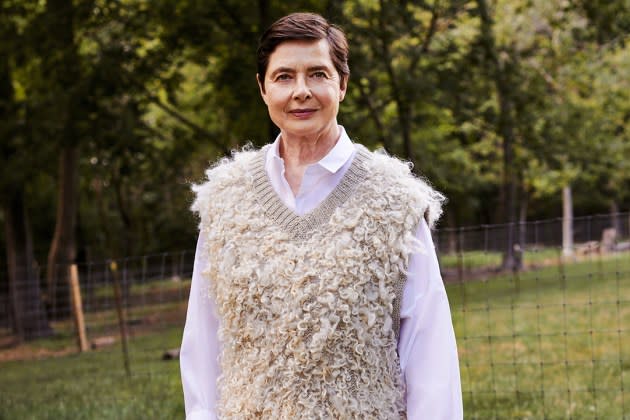

Isabella Rossellini: A Legacy of Talent and Grace

quartetoolinda.com – Isabella Rossellini was born on June 18, 1952, in Rome, Italy, into a family with a remarkable cinematic legacy. She is the daughter of Ingrid Bergman, a legendary Swedish actress known for her roles in classic films such as “Casablanca” and “Notorious,” and Roberto Rossellini, a pioneering Italian neorealist film director. Growing up in such an environment, Isabella was naturally influenced by the world of film and art from a young age.

Career Beginnings and Rise to Fame

Despite her illustrious heritage, Isabella Rossellini carved her own path in the entertainment industry. She initially pursued a career in modeling, becoming one of the most sought-after faces of the 1980s. Her striking beauty and elegance made her a favorite of photographers and designers alike. She is perhaps best known for her long-standing collaboration with Lancôme, where she served as the brand’s face for many years.

Isabella’s film career took off with her role in David Lynch’s 1986 film “Blue Velvet,” where she delivered a haunting performance that earned critical acclaim. This role marked the beginning of a diverse acting career that has spanned decades and includes notable films such as “Death Becomes Her,” “Fearless,” and “Immortal Beloved.”

Contributions to Film and Art

Beyond her work in front of the camera, Isabella Rossellini has made significant contributions to film and art. She has written and directed several short films, often exploring themes related to animals and nature. Her passion for these subjects is evident in her series “Green Porno,” which humorously and educationally explores the mating habits of various animals. This series showcases her unique ability to blend creativity with scientific curiosity.

Legacy and Influence

Isabella Rossellini’s legacy extends beyond her artistic achievements. She is an advocate for environmental conservation and animal rights, using her platform to raise awareness about these critical issues. Her dedication to both her craft and her causes has earned her respect and admiration worldwide.

Conclusion

Isabella Rossellini continues to be an influential figure in the arts, embodying the grace and talent inherited from her iconic parents while forging her own distinctive path. Her work in film, fashion, and advocacy reflects a commitment to creativity and a desire to make a meaningful impact on the world.

The African Lion’s Legacy: Pride and Power

In the vast, sun-drenched savannas of Africa, a majestic creature roams, embodying the very essence of strength, courage, and nobility. The African lion, Panthera leo, reigns as the king of the jungle, a symbol of power and pride that has captivated human imagination for millennia. This iconic big cat, with its impressive mane and resonant roar, holds a legacy that is as rich as it is complex, intertwining the threads of ecology, culture, and conservation.

The African lion is more than just an apex predator; it is a keystone species, playing a crucial role in maintaining the balance of its ecosystem. By preying on the weak and sick, lions help to ensure the health and genetic vitality of herbivore populations. Their presence also influences the behavior and distribution of other predators, creating a delicate balance that supports a diverse array of wildlife.

Lions live in social groups known as prides, which typically consist of several adult females, their cubs, and a few adult males. This unique social structure is the foundation of their legacy, embodying the very concept of pride. The bonds within a pride are strong, with members working together to raise their young, hunt, and defend their territory. The lionesses, the primary hunters, demonstrate remarkable cooperation and strategy, while the males, with their imposing manes, provide protection and ensure the survival of the pride.

Throughout history, the African lion has been revered and feared, its image woven into the tapestry of human culture. In ancient Egypt, the lion was associated with the goddess Sekhmet, symbolizing power and war, while in medieval European heraldry, the lion represented bravery and royalty. Across Africa, lions hold a special place in folklore and mythology, often depicted as wise and powerful spirits.

However, the legacy of the African lion is not without its challenges. Habitat loss, human-wildlife conflict, and poaching have pushed lion populations to the brink. Once ranging across much of Africa, as well as parts of Europe and Asia, lions now inhabit less than 25% of their historical range. Conservation efforts are crucial to safeguarding the future of these magnificent creatures, involving community engagement, anti-poaching measures, and habitat restoration.

The African lion’s legacy is a testament to the enduring power of nature and the importance of preserving our planet’s biodiversity. As we stand at a crossroads, with the fate of the lion and countless other species in our hands, we must remember the lessons of pride and power that the lion teaches us. It is a call to action, urging us to protect not only the lions but the intricate web of life that sustains us all.

In the words of the renowned conservationist George Adamson, “The only man who is truly free is the one who can turn down an invitation to dine with a king to go on a walk with a lion.” The African lion, with its legacy of pride and power, continues to inspire us to walk alongside nature, not as conquerors, but as guardians of the wild.