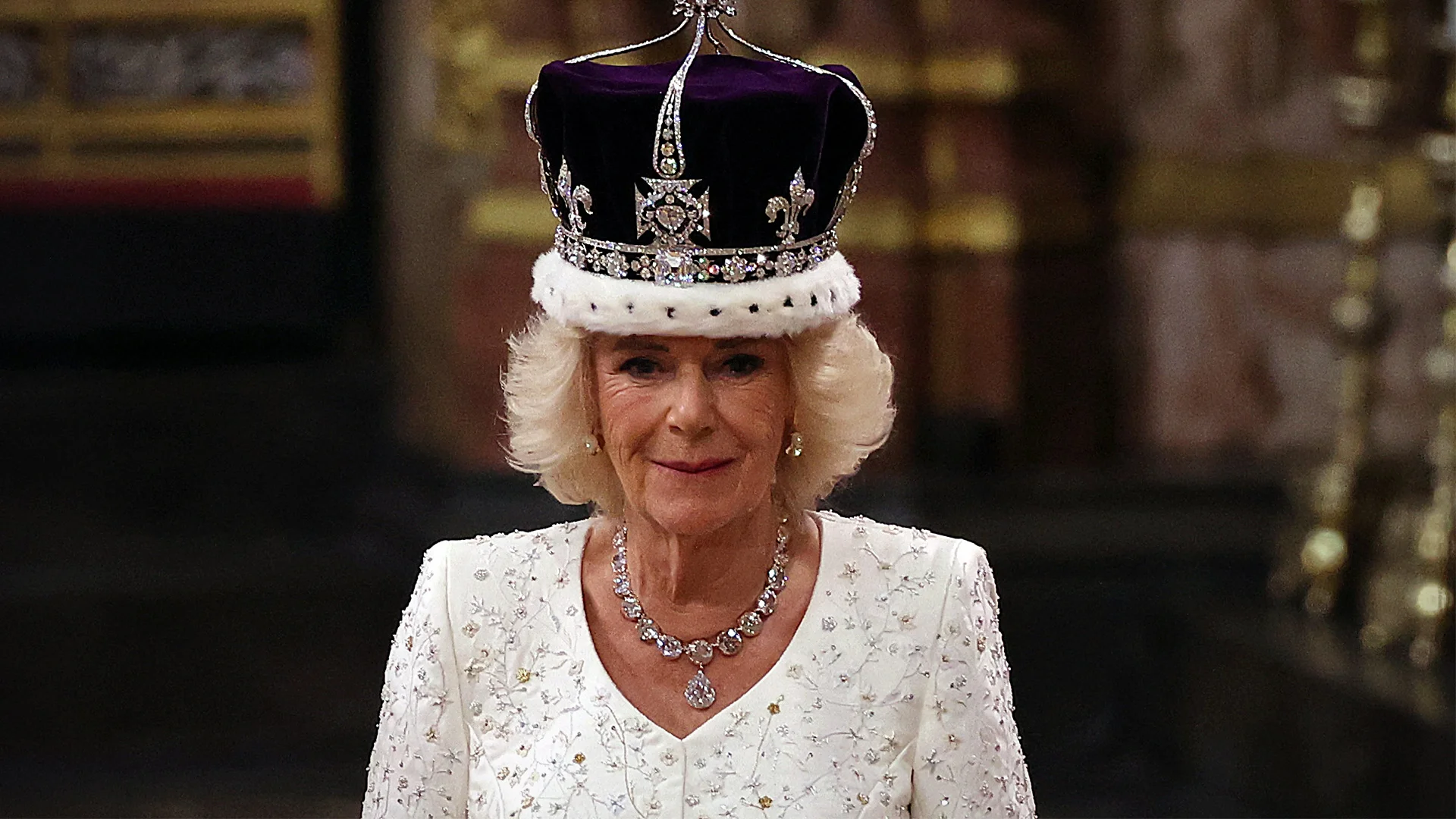
Queen Camilla: The Journey of a Consort

quartetoolinda.com – Queen Camilla, the wife of King Charles III, ascended to her new role following the death of Queen Elizabeth II and the coronation of her husband on May 6, 2023. Her journey from the wife of the Prince of Wales to becoming Queen Consort has been marked by significant public scrutiny, personal growth, and a steadfast dedication to charity work and royal duties. Today, Queen Camilla stands as an influential and respected figure within the British monarchy.

Early Life and Relationship with Charles

Camilla Rosemary Shand was born on July 17, 1947, into an aristocratic British family. She grew up in East Sussex and was educated at Dumbrells School and Queen’s Gate School in London before attending finishing schools in Switzerland and France. In the early 1970s, Camilla met Charles, then the Prince of Wales, and the two began a close relationship. Although their romance ended before Charles married Lady Diana Spencer, they maintained a lifelong friendship.

Camilla married Andrew Parker Bowles in 1973, and they had two children, Tom and Laura, before divorcing in 1995. Her relationship with Prince Charles reignited during the 1990s, and despite considerable public and media attention, the couple eventually married on April 9, 2005. Their marriage signaled a new chapter for both Charles and Camilla, and over time, Camilla gained acceptance as an integral part of the royal family.

Role as Duchess of Cornwall

Upon her marriage to Charles, Camilla took on the title of Duchess of Cornwall, stepping into her new role with grace and commitment. Over the years, she became a dedicated royal figure, championing causes close to her heart. Among her many interests are literacy, animal welfare, domestic violence prevention, and support for the elderly.

Camilla became the patron or president of several charitable organizations, including the National Literacy Trust and the Royal Osteoporosis Society, and has actively raised awareness on issues such as sexual assault and violence against women. Her advocacy work has earned her widespread respect and has allowed her to forge her own identity within the royal family, separate from her husband’s status.

Transition to Queen Consort

Camilla’s path to becoming Queen Consort was not without its challenges. For many years, her public image was shaped by her relationship with Charles during his marriage to Princess Diana. However, in recent years, public opinion has shifted significantly, with Camilla earning recognition for her tireless charitable work and her support of King Charles III.

Before her passing, Queen Elizabeth II expressed her “sincere wish” that Camilla would be known as Queen Consort when Charles became king, solidifying Camilla’s place in the future of the monarchy. This endorsement by the late queen marked a pivotal moment in Camilla’s public life, as it highlighted her acceptance within the royal fold.

Since assuming the title of Queen Consort, Camilla has continued her royal duties, maintaining a schedule of public appearances, charity events, and ceremonial responsibilities. Her steady presence and dedication to her role have helped her establish herself as a trusted and respected figure within the monarchy.

Queen Camilla’s Role Today

As Queen Consort, Camilla has remained focused on her work with charitable organizations and has continued to be an advocate for issues such as domestic violence and literacy. She has also shown a deep commitment to supporting her husband, King Charles III, in his duties as monarch. Together, they represent the continuation of the British royal tradition, blending respect for the past with an openness to change.

Camilla’s role as Queen Consort is largely ceremonial, but she brings with her a wealth of experience, both from her years of public service and her personal journey within the royal family. She has forged strong relationships with other members of the royal household and is seen as a stabilizing presence in times of transition.

The Legacy of Queen Camilla

Queen Camilla’s journey from the Duchess of Cornwall to Queen Consort is a testament to her resilience, adaptability, and quiet strength. While her public life has not always been easy, she has earned respect for her unwavering support of King Charles III and her dedication to causes that matter to her.

As she continues to fulfill her duties, Queen Camilla’s legacy will likely be defined by her advocacy for important social issues, her commitment to charity work, and her role in modernizing the royal family. With a compassionate heart and a strong sense of duty, she has carved out her place in the history of the British monarchy.
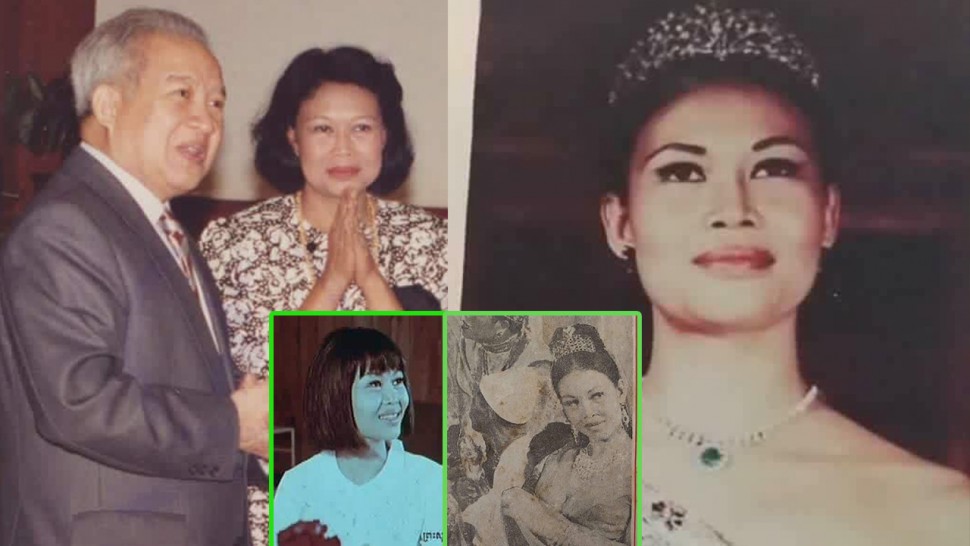
Saksi Sbong: The Queen of Villains – Icon of Cambodian Cinema

quartetoolinda.com – Saksi Sbong, a name synonymous with the golden age of Cambodian cinema, was a captivating actress renowned for her portrayal of complex and often villainous characters. Born in Phnom Penh in 1940, she quickly rose to fame and became one of the most recognizable faces of the era.   

A Versatile Actress

While Saksi Sbong was often typecast as a villain, she was a versatile actress capable of embodying a wide range of characters. Her ability to portray both sympathetic and sinister roles with equal skill made her a beloved figure among audiences.

The Queen of Villains

Saksi Sbong’s most iconic roles were as the quintessential villain. Her performances were characterized by a certain intensity and a magnetic presence that captivated audiences. Some of her most memorable villainous roles include:

  • Tep Sodachan: In this tragic love story, Saksi Sbong played the role of a manipulative and jealous woman who plots against the protagonists.   
  • Puos Keng Kong: In this historical drama, she portrayed a cunning and ruthless character who stops at nothing to achieve her goals.

A Cultural Icon

Beyond her acting career, Saksi Sbong became a cultural icon in Cambodia. Her beauty, elegance, and distinctive style made her a trendsetter. She was often featured in fashion magazines and advertisements, further solidifying her status as a beloved figure.

A Legacy That Endures

Despite the tragic events of the Khmer Rouge regime, Saksi Sbong’s legacy lives on. Her films continue to be celebrated and revered, and her performances are still considered to be some of the finest in Cambodian cinema history.

Key Points About Saksi Sbong:

  • A Versatile Actress: Capable of portraying a wide range of roles
  • The Queen of Villains: Renowned for her iconic villainous roles 
  • Cultural Icon: Beloved for her beauty, elegance, and style
  • Enduring Legacy: Continues to inspire future generations of actors

In conclusion, Saksi Sbong’s contributions to Cambodian cinema are immeasurable. Her talent, beauty, and charisma have made her a timeless icon. Her legacy will continue to inspire and captivate audiences for generations to come.

Celia Cruz: The Queen of Salsa

quartetoolinda.com – Celia Cruz, often hailed as the “Queen of Salsa,” was a legendary figure in the world of Latin music. Her powerful voice, charismatic stage presence, and indomitable spirit made her an icon not just in the salsa genre but in the broader music industry. Born Úrsula Hilaria Celia Caridad Cruz Alfonso on October 21, 1925, in Havana, Cuba, Cruz’s journey from a young girl singing in the streets of Havana to becoming an international superstar is a testament to her talent and perseverance.

Early Life and Career Beginnings

Cruz’s musical journey began in her early childhood. She grew up in a modest neighborhood in Havana and showed musical talent from a young age. Despite her father’s initial disapproval of her musical aspirations, Cruz’s determination led her to participate in local talent shows and eventually win a scholarship to study at the National Conservatory of Music.

Her big break came in 1948 when she joined the band La Sonora Matancera, one of the most popular bands in Cuba at the time. With La Sonora Matancera, Cruz traveled extensively throughout Latin America and the United States, gaining a reputation as a dynamic and captivating performer. Her powerful voice and unique style quickly made her the band’s star attraction.

Exile and Rise to International Fame

In 1960, following the Cuban Revolution, Cruz decided to leave Cuba and settle in the United States. This move marked the beginning of a new chapter in her career. Initially, life in exile was challenging, but Cruz’s resilience and talent helped her overcome these obstacles. She continued to perform and record music, gradually building a new audience in the United States and around the world.

Cruz’s collaboration with the Fania All-Stars in the 1970s was a pivotal moment in her career. This period saw the rise of salsa music, a genre that Cruz would come to epitomize. Her performances with the Fania All-Stars, including the landmark concert at the Cheetah Club in New York City, were legendary and helped popularize salsa music internationally.

Legacy and Influence

Celia Cruz’s influence on the music industry, particularly in the realm of Latin music, is immeasurable. Her unique style, combining elements of son cubano, guaracha, bolero, and jazz, helped shape the salsa genre. Her music transcended language and cultural barriers, making her a beloved figure worldwide.

Beyond her musical accomplishments, Cruz was a trailblazer for women in Latin music. She broke barriers and paved the way for future generations of female artists. Her legacy is also marked by her philanthropy and advocacy for Cuban immigrants and the Latino community.

Final Years and Legacy

Celia Cruz continued to perform and record music until her health began to decline in the early 2000s. She passed away on July 16, 2003, in Fort Lee, New Jersey, but her legacy lives on. Cruz has been honored with numerous awards and accolades, including induction into the International Latin Music Hall of Fame and the Billboard Latin Music Hall of Fame.

Today, Celia Cruz is remembered not only for her musical achievements but also for her indomitable spirit and the joy she brought to millions through her music. She remains an inspiration to artists and fans alike, a true Queen of Salsa whose legacy continues to influence the world of Latin music and beyond.

In conclusion, Celia Cruz’s life and career are a testament to the power of music to transcend cultural and linguistic barriers. Her legacy as the Queen of Salsa is a reminder of the enduring impact of her music and the indelible mark she left on the hearts of her fans around the world.