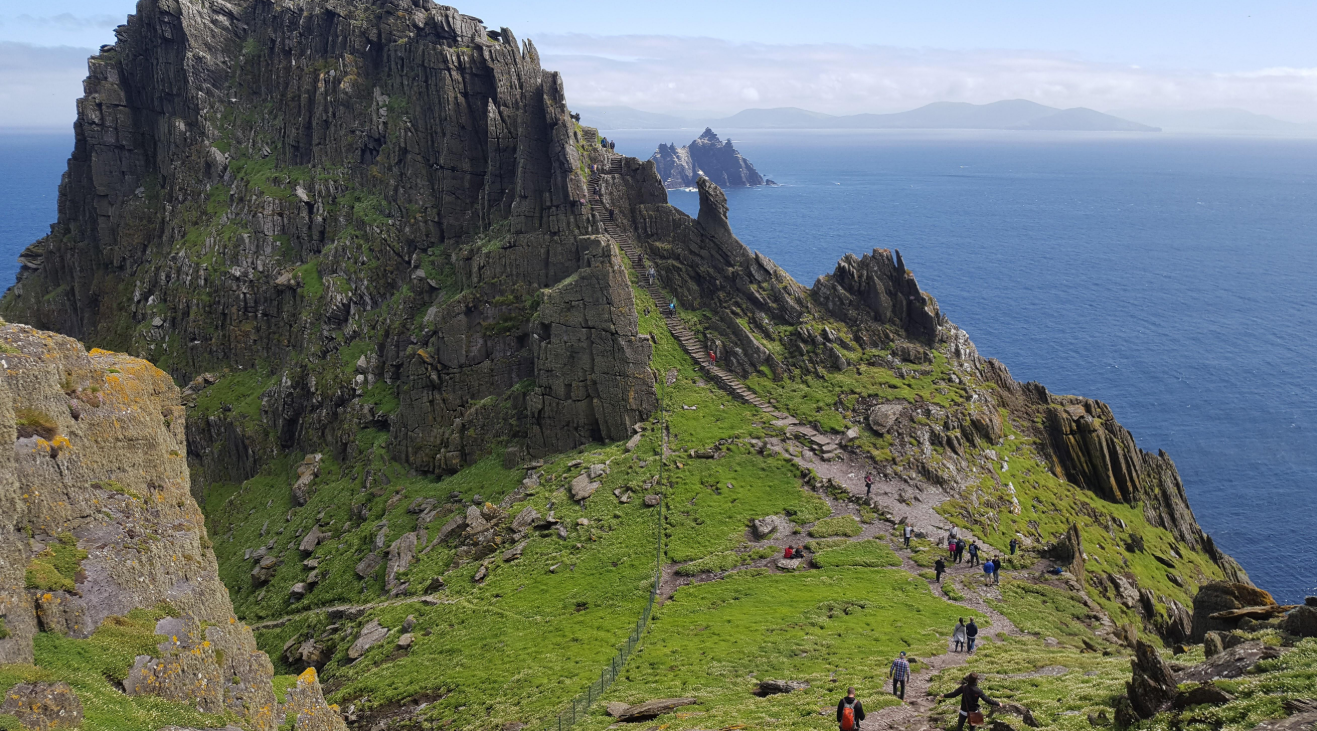
Skellig Michael: Pulau Legendaris di Balik Pengasingan Luke Skywalker

quartetoolinda.com – Pulau Skellig Michael di Irlandia menarik perhatian dunia setelah muncul di adegan akhir film Star Wars: The Force Awakens. Pulau berbatu ini menjadi lokasi persembunyian Luke Skywalker yang misterius. Para penggemar film dan wisatawan kini berbondong-bondong mengunjungi pulau terpencil tersebut.

Lokasi Syuting yang Membuat Dunia Terpukau

Sutradara J.J. Abrams memilih Skellig Michael karena keindahannya yang alami dan atmosfernya yang dramatis. Tebing curam, laut biru yang luas, dan biara kuno dari abad ke-6 menciptakan suasana magis. Abrams tidak menggunakan efek visual berlebihan dan justru mengandalkan kekuatan lanskap nyata untuk menghadirkan adegan klimaks yang memukau.

Sejarah Kuno Pulau Skellig Michael

Para biksu Kristen pertama membangun biara di Skellig Michael sekitar abad ke-6 Masehi. Mereka mencari kedamaian dan keterpencilan demi menjalani kehidupan spiritual. Struktur batu yang mereka tinggalkan masih berdiri kokoh hingga hari ini. UNESCO menetapkan Skellig Michael sebagai Situs Warisan Dunia sejak 1996 karena nilai sejarah dan arsitektur uniknya.

Perjalanan Menuju Lokasi yang Menantang

Wisatawan harus menyeberangi laut Atlantik selama 45 menit dari pelabuhan kecil Portmagee untuk mencapai Skellig Michael. Ombak tinggi dan angin kencang sering menggagalkan perjalanan. Para pengunjung kemudian mendaki lebih dari 600 anak tangga batu yang curam untuk mencapai puncak pulau. Meskipun menantang, pemandangan dan pengalaman spiritual yang mereka dapatkan selalu sepadan.

Dampak Popularitas Film terhadap Pariwisata

Setelah kemunculannya di The Force Awakens, jumlah wisatawan yang mengunjungi Skellig Michael meningkat drastis. Pemerintah Irlandia mencatat lonjakan kunjungan hingga dua kali lipat dibandingkan tahun sebelumnya. Namun, otoritas setempat membatasi jumlah pengunjung harian demi menjaga kelestarian situs bersejarah ini. Hanya 180 orang per hari yang boleh mendarat di pulau tersebut selama musim kunjungan dari Mei hingga Oktober.

Perpaduan Sinema dan Pelestarian Alam

Kementerian Warisan Irlandia bekerja sama dengan Lucasfilm untuk memastikan kegiatan syuting tidak merusak situs arkeologi. Mereka menerapkan protokol ketat saat pengambilan gambar. Pemerintah juga melibatkan para arkeolog dan ekolog untuk memantau dampak pariwisata terhadap flora dan fauna lokal, termasuk burung puffin yang menjadi penghuni tetap pulau ini.

Destinasi yang Menggoda Imajinasi

Skellig Michael bukan sekadar tempat wisata. Pulau ini memadukan sejarah https://www.superme-espana.com/, keindahan alam, dan keajaiban sinema. Para pengunjung merasa seperti berada di alam semesta Star Wars saat berdiri di puncaknya. Bagi banyak orang, kunjungan ke Skellig Michael menjadi pengalaman spiritual yang mendalam, bukan sekadar wisata biasa.

Exploring the Timeless Beauty of Suzhou Gardens

quartetoolinda.com – Suzhou, often referred to as the “Venice of the East,” is renowned for its classical Chinese gardens. These gardens are masterpieces of landscape design, blending natural beauty with artistic expression. Suzhou’s gardens are celebrated for their meticulous layout, elegant architecture, and harmonious balance between nature and man-made structures.

Historical Background

The history of Suzhou Gardens dates back over 2,000 years, with their development peaking during the Ming (1368-1644) and Qing (1644-1912) dynasties. These gardens were initially created as private retreats for scholars, officials, and wealthy merchants who sought solace and inspiration in nature. Today, Suzhou boasts over 50 classical gardens, with nine of them recognized as UNESCO World Heritage Sites.

Design Principles and Aesthetics

Suzhou Gardens are designed following the principles of Chinese landscape painting, where the representation of nature is idealized and symbolic. Key elements include:

  • Water Features: Ponds, streams, and waterfalls are integral, symbolizing life and movement.
  • Rocks: Carefully selected and arranged rocks represent mountains and are often sourced from Taihu Lake.
  • Architectural Elements: Pavilions, bridges, and corridors provide vantage points for viewing and are intricately decorated.
  • Plants: A diverse array of flora is chosen for their seasonal beauty, including plum blossoms, bamboo, and pine trees.

Notable Suzhou Gardens

The Humble Administrator’s Garden

As the largest and most famous garden in Suzhou, the Humble Administrator’s Garden is a quintessential example of Ming dynasty garden design. It features winding pathways, serene water features, and lush greenery. The garden’s layout is inspired by the natural landscapes of southern China and provides a tranquil escape from urban life.

The Lingering Garden

The Lingering Garden is celebrated for its architectural sophistication and exquisite collection of rocks. Its design emphasizes harmony and balance, with meticulously arranged spaces that encourage contemplation and reflection. The garden is divided into four distinct sections, each offering a unique aesthetic experience.

The Master of the Nets Garden

Despite being the smallest of Suzhou’s classical gardens, the Master of the Nets Garden is renowned for its compact yet intricate design. It exemplifies the concept of “borrowing scenery,” where views from outside the garden are integrated into the experience. This garden is a masterpiece of spatial awareness and artistic ingenuity.

Cultural Significance

Suzhou Gardens are not merely places of beauty but also hold deep cultural and philosophical significance. They reflect the Chinese ideals of harmony between humans and nature, a concept rooted in Confucianism and Daoism. The gardens serve as a source of inspiration for poets, artists, and scholars, embodying the essence of Chinese cultural heritage.

Preservation and Modern-Day Relevance

Efforts to preserve Suzhou Gardens have been ongoing, with restoration projects ensuring that their historical and cultural value is maintained for future generations. These gardens continue to attract tourists and scholars from around the world, offering a glimpse into the rich tapestry of Chinese history and aesthetics.

Conclusion

The Suzhou Gardens are a testament to the enduring appeal of classical Chinese landscape design. Their beauty lies not only in their visual splendor but also in their ability to evoke a sense of peace and contemplation. As we explore these serene spaces, we are reminded of the timeless connection between humanity and the natural world.

Peluang Investasi di Kamboja untuk Investor Asing

quartetoolinda – Dalam beberapa tahun terakhir, Kamboja telah menjadi salah satu tujuan investasi yang menarik bagi investor asing. Dengan pertumbuhan ekonomi yang pesat, kebijakan pro-bisnis, dan populasi muda yang dinamis, Kamboja menawarkan banyak peluang di berbagai sektor.

Kamboja mencatatkan pertumbuhan ekonomi yang signifikan, dengan laju pertumbuhan rata-rata sekitar 7% per tahun dalam satu dekade terakhir. Meskipun sempat terpengaruh oleh pandemi COVID-19, ekonomi Kamboja mulai pulih dan menunjukkan tanda-tanda pertumbuhan yang kuat. Menurut Bank Dunia, Kamboja diperkirakan akan tumbuh sebesar 5,5% pada tahun 2024.

Pemerintah Kamboja telah mengambil langkah-langkah untuk menciptakan lingkungan investasi yang lebih baik. Beberapa kebijakan yang diterapkan termasuk pengurangan pajak bagi investor asing, perlindungan investasi, dan kemudahan dalam mendapatkan izin usaha. Selain itu, Kamboja juga menjadi bagian dari beberapa perjanjian perdagangan bebas, seperti Perjanjian Kemitraan Ekonomi Regional (RCEP), yang memberikan akses lebih baik ke pasar internasional.

peluang-investasi-di-kamboja-untuk-investor-asing

Sektor-Sektor yang Menjanjikan

  1. Industri Manufaktur: Kamboja telah menjadi pusat manufaktur, terutama dalam sektor tekstil dan pakaian. Dengan biaya tenaga kerja yang relatif rendah dan lokasi yang strategis, industri ini menarik banyak investor asing.
  2. Pariwisata: Kamboja dikenal dengan situs warisan dunia seperti Angkor Wat, dan sektor pariwisata memiliki potensi besar untuk berkembang. Investasi dalam infrastruktur pariwisata, hotel, dan layanan terkait lainnya sangat dibutuhkan.
  3. Pertanian: Kamboja memiliki sumber daya alam yang melimpah dan tanah yang subur. Investasi dalam teknologi pertanian dan pengolahan makanan dapat meningkatkan produksi dan kualitas produk pertanian.
  4. Teknologi Informasi dan Komunikasi (TIK): Seiring dengan pertumbuhan pengguna internet dan smartphone, sektor TIK di Kamboja semakin berkembang. Investasi dalam startup teknologi dan infrastruktur digital memiliki potensi yang sangat besar.

peluang-investasi-di-kamboja-untuk-investor-asing

Meskipun banyak peluang, investasi di kamboja slot tidak tanpa tantangan. Beberapa isu seperti korupsi, kurangnya infrastruktur yang memadai, dan ketidakpastian hukum masih menjadi perhatian bagi investor asing. Oleh karena itu, penting bagi investor untuk melakukan penelitian yang mendalam dan memahami kondisi lokal sebelum berinvestasi.

Kamboja menawarkan banyak peluang investasi yang menarik bagi investor asing. Dengan pertumbuhan ekonomi yang stabil, kebijakan pro-bisnis, dan sektor-sektor yang menjanjikan, Kamboja siap menjadi salah satu tujuan investasi utama di Asia Tenggara. Bagi investor yang siap menghadapi tantangan dan beradaptasi dengan kondisi lokal, Kamboja dapat menjadi ladang investasi yang menguntungkan.

Keindahan Empat Musim di Tohoku: Destinasi Liburan Jepang yang Selalu Memesona

quartetoolinda.com – Terletak di bagian timur laut Jepang, Tohoku adalah sebuah kawasan yang menawarkan pesona alam luar biasa sepanjang tahun. Tohoku terkenal karena pemandangan indahnya, kekayaan budaya, serta suasana yang damai dan alami. Salah satu daya tarik utama dari Tohoku adalah keindahan yang berubah sesuai dengan pergantian musim, membuat kawasan ini menjadi destinasi liburan yang selalu memesona dalam setiap musimnya. Dari bunga sakura yang mekar di musim semi hingga salju tebal yang menciptakan “monster salju” di musim dingin, Tohoku adalah tempat yang ideal untuk menikmati pesona empat musim Jepang.

1. Musim Semi (Maret – Mei): Mekarnya Bunga Sakura yang Memikat

keindahan-empat-musim-di-tohoku-destinasi-liburan-jepang-yang-selalu-memesona

Musim semi di Tohoku adalah saat yang dinantikan oleh banyak wisatawan karena ini adalah musim mekar bunga sakura. Bunga sakura yang lembut menghiasi berbagai taman, kuil, dan jalanan, menciptakan pemandangan yang memukau. Salah satu tempat terbaik untuk menikmati keindahan sakura di Tohoku adalah Taman Hirosaki di Prefektur Aomori. Taman ini terkenal dengan kastil bersejarahnya yang dikelilingi lebih dari 2.500 pohon sakura. Saat mekar penuh, kelopak bunga yang jatuh ke permukaan air menciptakan pemandangan “karpet sakura” yang sangat indah.

Selain itu, Tepi Sungai Kitakami di Prefektur Iwate juga merupakan tempat populer untuk hanami (piknik di bawah bunga sakura). Ribuan pohon sakura berbaris di sepanjang sungai, dan pengunjung dapat menikmati pemandangan dengan berjalan kaki atau naik perahu sambil menyaksikan kelopak bunga beterbangan di udara.

2. Musim Panas (Juni – Agustus): Festival dan Pemandangan Alam yang Menyegarkan

keindahan-empat-musim-di-tohoku-destinasi-liburan-jepang-yang-selalu-memesona

Musim panas di Tohoku tidak hanya menawarkan pemandangan alam yang subur dan hijau, tetapi juga berbagai festival tradisional yang penuh warna dan semangat. Salah satu yang paling terkenal adalah Festival Nebuta di Aomori, yang diadakan pada awal Agustus. Festival ini menampilkan parade lentera raksasa berbentuk prajurit samurai dan makhluk mitologis yang diarak melalui kota, diiringi oleh musik tradisional Jepang. Cahaya lentera yang berkilauan di malam hari menciptakan suasana magis dan penuh energi.

Tohoku juga dikenal dengan keindahan alamnya di musim panas, seperti Danau Towada yang terletak di perbatasan Prefektur Aomori dan Akita. Dikelilingi oleh pegunungan hijau, danau ini adalah tempat yang sempurna untuk menikmati ketenangan dan pemandangan alam yang menyegarkan. Di sekitar danau, terdapat jalur hiking yang membawa pengunjung melewati hutan dan air terjun yang memukau, seperti Air Terjun Oirase yang terkenal.

3. Musim Gugur (September – November): Warna-Warni Daun yang Menakjubkan

keindahan-empat-musim-di-tohoku-destinasi-liburan-jepang-yang-selalu-memesona

Musim gugur di Tohoku adalah salah satu yang paling spektakuler di Jepang, dengan dedaunan yang berubah menjadi warna-warna cerah seperti merah, oranye, dan kuning. Salah satu tempat terbaik untuk menikmati pemandangan musim gugur adalah Gorge Naruko di Prefektur Miyagi. Lembah ini terkenal dengan pemandangan dramatisnya, di mana pepohonan yang berubah warna memadukan keindahan alam yang luar biasa dengan jurang-jurang terjal yang dihiasi sungai-sungai yang jernih.

Tempat lain yang wajib dikunjungi di musim gugur adalah Gunung Zao, yang terletak di perbatasan Prefektur Yamagata dan Miyagi. Gunung berapi aktif ini tidak hanya menawarkan pemandangan dedaunan yang luar biasa, tetapi juga Kawah Okama, sebuah kawah vulkanik yang memiliki danau berwarna hijau zamrud. Pendakian di gunung ini adalah cara terbaik untuk merasakan pesona musim gugur di Tohoku.

Selain keindahan alam, musim gugur di Tohoku juga dipenuhi dengan festival panen, di mana masyarakat setempat merayakan hasil bumi dengan makanan khas yang hangat dan lezat, seperti kiritanpo, nasi yang dibentuk menjadi batang panjang dan dipanggang di atas api, khas Prefektur Akita.

4. Musim Dingin (Desember – Februari): Negeri Salju dan Monster Salju yang Ajaib

keindahan-empat-musim-di-tohoku-destinasi-liburan-jepang-yang-selalu-memesona

Tohoku dikenal sebagai negeri salju, dan musim dingin di kawasan ini adalah pengalaman yang benar-benar ajaib. Salah satu fenomena alam yang paling unik di Tohoku adalah “monster salju” di Pegunungan Zao, Yamagata. Monster salju ini terbentuk ketika salju tebal menutupi pepohonan, menciptakan bentuk-bentuk raksasa yang tampak seperti makhluk mitologi. Fenomena ini menarik banyak wisatawan yang ingin bermain ski atau snowboarding sambil menikmati pemandangan yang tidak biasa ini.

Selain Pegunungan Zao, Tohoku juga memiliki banyak resor ski terkenal, seperti Appi Kogen di Prefektur Iwate, yang menawarkan jalur ski berkualitas internasional dan onsen (pemandian air panas) yang nyaman. Onsen di Tohoku, terutama yang terletak di tengah-tengah pegunungan bersalju, menawarkan pengalaman relaksasi yang sempurna setelah seharian bermain di salju.

Bagi mereka yang mencari suasana damai di musim dingin, Ginzan Onsen di Yamagata adalah pilihan yang tepat. Desa kecil ini terkenal dengan penginapan tradisionalnya yang terletak di sepanjang sungai, yang terlihat seperti pemandangan dari masa lalu ketika ditutupi salju. Berendam di onsen sambil melihat salju turun adalah pengalaman yang sangat menenangkan.

Tohoku adalah destinasi yang menawarkan keindahan empat musim yang berbeda dan menakjubkan. Setiap musim di kawasan ini memiliki pesona tersendiri, dari mekarnya sakura di musim semi, festival penuh warna di musim panas, dedaunan yang berubah warna di musim gugur, hingga fenomena salju ajaib di musim dingin. Tohoku bukan hanya sekadar tempat wisata, tetapi juga sebuah perjalanan untuk merasakan kekayaan alam dan budaya jepang slot yang mendalam.

Apakah Anda mencari petualangan alam atau ingin menikmati festival dan budaya tradisional, Tohoku memiliki semuanya. Dengan keindahan yang selalu berubah sepanjang tahun, Tohoku adalah destinasi liburan yang tak pernah kehilangan pesonanya, membuat siapa pun yang berkunjung ingin kembali lagi dan lagi.
The FBI: A Comprehensive History

quartetoolinda.com – The Federal Bureau of Investigation (FBI) has been a cornerstone of American law enforcement and intelligence since its inception in 1908. Its journey from a small investigative unit to a global powerhouse is marked by pivotal moments that have shaped both its internal structure and its role in national and international affairs.

Origins and Early Years

The FBI was established as the Bureau of Investigation (BOI) by President Theodore Roosevelt in 1908, tasked with investigating federal crimes and corruption. The bureau’s initial focus was on white-collar crime and violations of federal laws, but it quickly expanded its scope to include domestic intelligence and counterintelligence operations. The appointment of J. Edgar Hoover as director in 1924 marked a significant turning point, as he transformed the bureau into a more professional and powerful entity.

The Rise of J. Edgar Hoover

Under Hoover’s leadership, the FBI underwent significant restructuring and expansion. He introduced rigorous hiring standards, emphasizing education and law enforcement experience. The bureau also developed advanced forensic techniques and expanded its role in domestic intelligence, which included controversial operations like the Palmer Raids during the Red Scare of the early 1920s.

Prohibition and the Great Depression

The era of Prohibition and the subsequent Great Depression saw the FBI rise to national prominence. The bureau took on notorious criminals like John Dillinger, Bonnie and Clyde, and Al Capone, which not only boosted its public image but also solidified its role as a key player in domestic law enforcement.

World War II and Beyond

During World War II, the FBI’s role expanded significantly, with Hoover overseeing intelligence operations in the Western Hemisphere. This period saw the bureau’s powers grow, as it was tasked with monitoring potential threats from American Nazi and communist groups. The FBI’s international presence also grew, with the establishment of Legal Attache offices in U.S. embassies around the world.

Modern Challenges and Controversies

In the post-war era, the FBI continued to evolve, adapting to new threats such as organized crime, terrorism, and cybercrime. The bureau’s role in domestic surveillance and counterintelligence operations has been both praised and criticized, particularly in the context of civil liberties and privacy concerns. The 21st century has seen the FBI at the forefront of counterterrorism efforts, including the investigation of the September 11 attacks and subsequent global counterterrorism operations.

Conclusion

The FBI’s history is a testament to its adaptability and resilience in the face of changing national and international threats. From its origins as a small investigative unit to its current status as a global intelligence and law enforcement agency, the FBI has played a crucial role in shaping American security and justice. As it continues to evolve, the bureau remains a central figure in the ongoing struggle against crime and terrorism.

A History of Polynesian Sovereignty: The Kingdom of Tonga

quartetoolinda.com – The Kingdom of Tonga, nestled in the heart of the South Pacific, is a unique testament to the enduring sovereignty of Polynesian culture. Unlike many of its Pacific Island neighbors, Tonga has maintained its independence throughout history, avoiding colonization and preserving its distinct cultural identity. This article delves into the historical journey of Tonga, exploring how it has managed to uphold its sovereignty and the significance of this achievement in the context of Polynesian history.

Early History and Unification

Tonga’s history dates back over a millennium, with the islands being settled by Polynesian voyagers around the 10th century. The archipelago, comprising over 170 islands, was initially divided into various chiefdoms. However, in the 10th century, the Tu’i Tonga Empire emerged, unifying the islands under a single ruling dynasty. This empire was not only a political entity but also a religious one, with the Tu’i Tonga being considered both a king and a god.

European Contact and the Cession Crisis

The arrival of European explorers in the 17th and 18th centuries marked a significant turning point for Tonga. The islands were first sighted by the Dutch explorer Abel Tasman in 1616, followed by the British explorer Captain James Cook in the late 18th century. Despite these encounters, Tonga managed to resist colonization, largely due to its strategic location and the astute diplomacy of its leaders.

The 19th century saw Tonga navigate the treacherous waters of European imperialism. The most significant challenge came in the form of the Cession Crisis of 1875, when the British attempted to annex the islands. However, through the diplomatic efforts of King George Tupou I and his advisors, Tonga managed to secure its sovereignty, entering into a Treaty of Friendship with Britain instead.

Modern Tonga and Its Sovereign Legacy

Today, Tonga remains one of the few Pacific Island nations to have never been formally colonized. This legacy of sovereignty is a source of immense pride for Tongans, who have worked to preserve their cultural heritage and traditions. The monarchy, currently led by King Tupou VI, continues to play a central role in the governance of the country, blending traditional Polynesian customs with modern statehood.

Tonga’s history of sovereignty has also positioned it as a leader among Pacific Island nations, advocating for indigenous rights and environmental sustainability in the face of climate change. The kingdom’s ability to maintain its independence and cultural identity serves as an inspiration for indigenous peoples around the world.

Conclusion

The Kingdom of Tonga stands as a beacon of Polynesian sovereignty, a living testament to the resilience and ingenuity of its people. Through centuries of external pressures and internal challenges, Tonga has managed to preserve its unique cultural heritage and political autonomy. As the world continues to evolve, Tonga’s history serves as a reminder of the importance of sovereignty and the enduring spirit of Polynesian peoples.

Preserving Natural Resources: Tunisia’s Environmental Challenges

quartetoolinda.com – Tunisia, a country rich in natural beauty and biodiversity, faces a range of environmental challenges that threaten its precious natural resources. From desertification and water scarcity to pollution and loss of biodiversity, these issues require urgent attention and sustainable solutions. The preservation of Tunisia’s environment is not only crucial for the well-being of its inhabitants but also for the maintenance of its unique ecosystems.

Desertification: A Growing Threat

One of the most pressing environmental challenges in Tunisia is desertification. The southern regions of the country, particularly the Sahara Desert, are experiencing an expansion of desert-like conditions due to climate change, overgrazing, and unsustainable agricultural practices. This phenomenon leads to the degradation of land, loss of fertile soil, and a decline in agricultural productivity.

Water Scarcity: A Critical Issue

Water scarcity is another critical issue facing Tunisia. The country’s reliance on limited freshwater resources, exacerbated by climate change and increasing demand, has led to severe water shortages. Overexploitation of groundwater, inefficient irrigation practices, and pollution further strain water supplies. Addressing water scarcity is essential for ensuring the sustainability of agriculture, supporting economic development, and maintaining ecosystem health.

Pollution: Threatening Air and Water Quality

Pollution poses a significant threat to Tunisia’s environment, affecting both air and water quality. Industrial emissions, agricultural runoff, and untreated wastewater contribute to the degradation of natural resources. The Mediterranean Sea, a vital economic and ecological asset, is particularly vulnerable to pollution, which impacts marine life and coastal ecosystems.

Biodiversity Loss: A Concern for Conservation

Tunisia’s unique biodiversity is under threat due to habitat destruction, pollution, and climate change. The country is home to a variety of endemic species, many of which are now endangered. Protected areas and national parks, such as the Ichkeul National Park and the Djebel Chambi National Park, play a crucial role in conserving biodiversity, but they require continued support and management to be effective.

Sustainable Solutions: The Path Forward

Addressing Tunisia’s environmental challenges requires a multifaceted approach that includes sustainable land management, water conservation, pollution control, and biodiversity conservation. The government, in collaboration with local communities, NGOs, and international organizations, must implement policies and initiatives that promote sustainable practices, protect natural habitats, and ensure the long-term health of the environment.

Conclusion

Tunisia’s environmental challenges are complex and interconnected, requiring concerted efforts to preserve the country’s natural resources. By adopting sustainable practices and prioritizing environmental protection, Tunisia can safeguard its ecosystems, support its communities, and ensure a sustainable future for generations to come.

Eritrea: A Historical Overview from Prehistory to the Present

quartetoolinda.com – Eritrea’s history stretches back to prehistoric times, with archaeological evidence suggesting human habitation in the region for hundreds of thousands of years. The area was part of the broader Horn of Africa, a region known for its rich prehistoric cultural heritage. Stone tools and other artifacts found in Eritrea indicate that early hominids and later human populations occupied the territory, participating in the gradual development of tool-making and hunting-gathering societies.

Ancient Kingdoms and the Aksumite Empire

The Dawn of Civilization

The emergence of organized societies in Eritrea is closely tied to the development of agriculture and the establishment of trade networks. By the 1st millennium BCE, several kingdoms and city-states had emerged in the region, interacting with neighboring civilizations such as Egypt and the Arabian Peninsula.

The Aksumite Empire

One of the most significant ancient states to arise in the region was the Aksumite Empire, which reached its zenith between the 4th and 7th centuries CE. Aksum was a powerful kingdom that controlled trade routes linking Africa, the Middle East, and the Mediterranean. It was also one of the first regions in Africa to adopt Christianity as its state religion in the 4th century. The Aksumites left behind impressive architectural achievements, including stelae and palaces, as well as a written script known as Ge’ez.

Medieval Period and the Arrival of Islam

The Zagwe Dynasty and the Solomonic Dynasty

Following the decline of Aksum, Eritrea and the broader Ethiopian Highlands saw the rise of the Zagwe dynasty in the 12th century, which was later succeeded by the Solomonic dynasty in the 13th century. These dynasties continued to exert influence over the region, although their control over Eritrea was not as direct as that of the Aksumites.

The Spread of Islam

The medieval period also saw the spread of Islam into the Horn of Africa, with Muslim traders and scholars establishing communities along the Eritrean coast. The port city of Massawa became an important center of Islamic culture and commerce, linking the region to the broader Islamic world.

Colonial Era and the Struggle for Independence

Italian Colonization

In the late 19th century, European powers began to vie for control over Africa, including Eritrea. Italy established a protectorate over Eritrea in 1889, marking the beginning of colonial rule. The Italians sought to exploit Eritrea’s resources and use it as a base for further expansion into the Horn of Africa.

World War II and the Federation with Ethiopia

Eritrea’s status changed after World War II, when Italy was defeated and the United Nations took control of the territory. In 1952, Eritrea was federated with Ethiopia under a UN resolution, granting it a degree of autonomy. However, this arrangement was short-lived, as Ethiopia annexed Eritrea outright in 1962, leading to widespread dissatisfaction and the beginning of the Eritrean independence movement.

The Eritrean War of Independence

The Eritrean People’s Liberation Front (EPLF) emerged as the leading force in the struggle for independence, waging a protracted guerrilla war against the Ethiopian government. The conflict lasted for nearly three decades, with significant human and economic costs.

Independence and Recent History

Gaining Independence

Eritrea finally gained its independence in 1993, following a referendum in which Eritreans overwhelmingly voted to secede from Ethiopia. The new nation faced numerous challenges, including rebuilding its infrastructure and economy, which had been devastated by the long years of conflict.

Border Conflict with Ethiopia

Despite achieving independence, Eritrea’s relations with Ethiopia remained tense. A border conflict erupted in 1998, leading to a two-year war that resulted in tens of thousands of casualties and a stalemate. A peace agreement was signed in 2000, but the border remained disputed and heavily militarized.

Contemporary Eritrea

Today, Eritrea is a one-party state led by the People’s Front for Democracy and Justice (PFDJ), the successor to the EPLF. The government has been criticized for its authoritarian rule and human rights abuses. Eritrea also faces economic challenges, with a reliance on agriculture and a limited industrial base. Despite these difficulties, Eritrea has made efforts to develop its infrastructure and improve its relations with neighboring countries, seeking to establish itself as a stable and prosperous nation in the Horn of Africa.

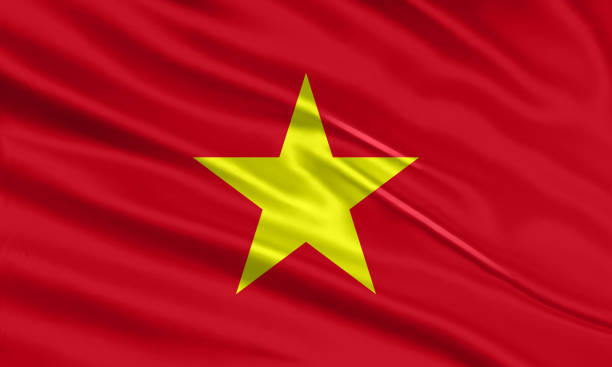
Vietnam: A History of Resilience and Renewal

quartetoolinda.com – Vietnam’s history is a testament to the indomitable spirit of its people, marked by centuries of resilience and renewal in the face of adversity. From ancient times to the modern era, Vietnam has navigated through periods of foreign domination, internal strife, and economic challenges, emerging each time with a renewed sense of purpose and identity.

The Early Kingdoms and Chinese Domination

The story of Vietnam begins with the establishment of the early kingdoms in the Red River Delta, which eventually came under the rule of the Chinese Han Dynasty in 111 BCE. For nearly a millennium, Vietnam was under Chinese domination, a period that significantly influenced its culture, language, and political systems. Despite this, the Vietnamese people maintained a distinct identity and made several attempts to assert their independence, culminating in the expulsion of the Mongols in the 13th century and the establishment of the Tran Dynasty.

The Struggle for Independence

The quest for independence continued with the rise of the Le Dynasty in the 15th century, which successfully expelled the Chinese Ming Dynasty forces and established a period of relative stability and prosperity. However, the country later fell into civil war and was divided into rival states, leading to centuries of internal conflict and instability.

French Colonialism and the Road to Modern Independence

The 19th century saw the arrival of French colonialists, who gradually took control of Vietnam, Laos, and Cambodia, forming French Indochina. The colonial period was marked by economic exploitation and cultural suppression, but it also laid the groundwork for modern education and infrastructure. The Vietnamese resistance against French rule began in earnest in the early 20th century, led by nationalist groups and, notably, the Communist Party under Ho Chi Minh.

The Vietnam War and Reunification

The struggle for independence reached its zenith with the Vietnam War, a prolonged and brutal conflict that involved the United States and its allies on one side and the North Vietnamese and Viet Cong on the other. The war ended in 1975 with the fall of Saigon and the reunification of Vietnam under the communist government. The country then embarked on a path of reconstruction and renewal, facing the challenges of post-war recovery and international isolation.

Economic Renewal and Integration

In the late 20th century, Vietnam began to implement economic reforms known as Doi Moi, which opened the country to foreign investment and market principles. This period marked a significant turning point, as Vietnam transitioned from a centrally planned to a socialist-oriented market economy. The reforms led to rapid economic growth, poverty reduction, and integration into the global economy, culminating in Vietnam’s accession to the World Trade Organization in 2007.

Contemporary Challenges and Opportunities

Today, Vietnam continues to navigate the complexities of economic development, political governance, and international relations. The country faces challenges such as environmental degradation, inequality, and the need for political reform. However, its history of resilience and renewal suggests that Vietnam is well-equipped to meet these challenges, maintaining its trajectory of growth and integration into the global community.

In conclusion, Vietnam’s history is a narrative of resilience and renewal, characterized by the enduring spirit of its people. From ancient kingdoms to modern nationhood, Vietnam has demonstrated an unyielding determination to overcome adversity and forge a path towards progress and prosperity.

A Debt-Free Budget for 2025: El Salvador’s Economic Outlook

quartetoolinda.com – In a bold move that signals a significant shift in fiscal policy, El Salvador’s President Nayib Bukele has unveiled the country’s first debt-free budget for the year 2025. This announcement marks a pivotal moment in the nation’s economic trajectory, aiming to break away from its historical reliance on debt financing.

A Shift Towards Fiscal Independence

President Bukele’s 2025 budget proposal represents a dramatic departure from previous years, as it aims for a zero-deficit budget. This approach is a testament to the government’s commitment to fiscal responsibility and economic stability. By eliminating the budget deficit, El Salvador aims to achieve fiscal independence, a goal that has been a cornerstone of Bukele’s economic policy since he took office.

Impact on the Economy

The decision to present a debt-free budget for 2025 has been met with positive reactions from both domestic and international financial markets. El Salvador’s sovereign debt saw a significant increase in value following the announcement, indicating investor confidence in the country’s fiscal health.

Moreover, this move is expected to have long-term benefits for the Salvadoran economy. By not issuing new debt, the government will avoid the burden of interest payments, which can be a substantial drain on public finances. This fiscal discipline is likely to contribute to a more stable economic environment, potentially attracting more foreign investment and fostering sustainable growth.

Challenges and Opportunities

While the decision to adopt a debt-free budget is commendable, it also presents challenges. Achieving a zero-deficit budget without borrowing will require careful management of public finances and a focus on increasing revenue through efficient tax collection and economic growth. The government will need to ensure that its spending priorities are aligned with its revenue streams to avoid potential shortfalls.

Additionally, the success of this budget will depend on the overall economic performance of the country. El Salvador’s economy has shown moderate growth in recent years, with projections indicating a steady growth rate in 2024. The government will need to leverage this momentum to support its fiscal goals.

Conclusion

El Salvador’s decision to present a debt-free budget for 2025 is a significant step towards fiscal independence and economic stability. By committing to a zero-deficit budget, the government aims to create a more sustainable financial future for the country. While this approach comes with its challenges, the potential benefits of reduced debt and increased investor confidence make it a strategic move for El Salvador’s long-term economic health.

Japan’s Medal Triumph at the 2024 Paris Olympics

quartetoolinda.com – Japan’s performance at the 2024 Paris Olympics was nothing short of spectacular, as the nation clinched an impressive haul of medals across various sports. The athletes displayed exceptional skill, determination, and teamwork, showcasing Japan’s prowess on the global stage.

Highlights of Japan’s Medal Wins

One of the standout moments came in gymnastics, where Japan’s team executed a series of flawless routines to secure the gold medal. In swimming, Japanese swimmers made a splash with multiple podium finishes, including a historic gold in the men’s 200m butterfly. The nation’s judo team also excelled, bringing home several medals, including a bronze secured in a thrilling men’s -73kg match.

The Role of Teamwork and Strategy

Japan’s success was not just a result of individual brilliance but also the strategic planning and teamwork that went into each event. Coaches and support staff played a crucial role in preparing the athletes, while the athletes themselves demonstrated exceptional camaraderie and support for one another.

Impact on Japanese Sports Culture

The triumph at the 2024 Paris Olympics is expected to have a significant impact on Japan’s sports culture. It will likely inspire a new generation of athletes and further elevate the nation’s reputation as a powerhouse in international sports. The victories are also likely to lead to increased investment in sports infrastructure and training programs, ensuring that Japan remains competitive in future Olympic Games.

Celebrations and Recognition

Back in Japan, the medal triumphs were met with widespread celebrations. Athletes were hailed as heroes, and their achievements were recognized with parades, endorsements, and honors. The government and private sector expressed their commitment to supporting athletes, highlighting the importance of sports in national pride and identity.

Looking Ahead to Future Games

As Japan basks in the glory of its 2024 Paris Olympics success, the focus is already shifting to future competitions. Athletes and officials are analyzing the performance, identifying areas for improvement, and setting their sights on the next Olympic Games. With the foundation laid by the 2024 triumph, Japan is poised to continue its journey as a leading force in international sports.

An Overview of the School System: Education in Panama

quartetoolinda.com – Panama’s education system is a critical component of the country’s development, playing a pivotal role in shaping the future of its youth. This article provides an in-depth look at the structure, challenges, and advancements of schooling in Panama, highlighting the efforts being made to improve educational outcomes for students across the nation.

The Structure of Education in Panama

The Panamanian education system is divided into three main levels: pre-primary, primary, and secondary education. Pre-primary education is designed for children aged 4 to 5, focusing on early childhood development. Primary education spans from ages 6 to 11, covering six grades, while secondary education, for students aged 12 to 17, is divided into three cycles, each lasting two years.

Public vs. Private Education

In Panama, both public and private schools operate, catering to a diverse student population. Public schools are free and accessible to all, making them the primary choice for the majority of Panamanian children. Private schools, on the other hand, offer a range of educational philosophies and curricula, including international programs, and are often sought after for their smaller class sizes and additional resources.

Challenges Facing Education in Panama

Despite its importance, the education system in Panama faces several challenges. Disparities in educational quality and access persist, particularly between urban and rural areas. Rural schools often lack adequate infrastructure, resources, and qualified teachers, impacting the quality of education provided. Additionally, issues such as high dropout rates, particularly among adolescents, and the need for educational reform to meet the demands of a rapidly changing global economy, are pressing concerns.

Efforts to Improve Education

The Panamanian government and various organizations are actively working to address these challenges. Initiatives include investing in school infrastructure, teacher training programs, and the introduction of technology in classrooms to enhance learning experiences. Moreover, there is a growing emphasis on early childhood education and the expansion of vocational training programs to provide students with practical skills and improve employment opportunities.

Conclusion

The education system in Panama is at a crossroads, with the potential to significantly impact the country’s social and economic development. By addressing the existing disparities and investing in quality education for all, Panama can ensure that its youth are well-equipped to face the future. Continued efforts and collaboration between the government, educational institutions, and the community are essential in achieving this goal, paving the way for a more educated and prosperous nation.

Latvia: A Cultural Profile of Latvia’s Cultural Heritage and Traditions

quartetoolinda.com – Latvia, a country with a rich tapestry of cultural heritage and traditions, is nestled in the Baltic region of Northern Europe. Its history, influenced by various rulers and neighboring cultures, has shaped a unique blend of traditions, arts, and customs that define Latvian identity. From the ancient pagan rituals to the modern-day festivals, Latvia’s cultural profile is a fascinating exploration of its people’s history, resilience, and creativity.

The Roots of Latvian Culture: Ancient Traditions and Folklore

The cultural heritage of Latvia is deeply rooted in its ancient pagan traditions and folklore. The Latvian people have a rich collection of folk songs, known as dainas, which are an integral part of their cultural identity. These songs, often passed down through generations, tell stories of love, nature, and the struggles of daily life. The Latvian daina was inscribed on UNESCO’s Representative List of the Intangible Cultural Heritage of Humanity in 2008.

Festivals and Celebrations: A Year of Traditions

Latvia’s cultural calendar is filled with festivals and celebrations that reflect its deep connection to nature and the changing seasons. One of the most significant events is Jāņi, the midsummer festival, which celebrates the summer solstice with bonfires, folk music, and the gathering of herbs believed to have magical properties. Another important celebration is Winter Solstice, or Ziemassvētki, which is similar to Christmas and involves decorating homes with greenery and lighting candles to symbolize the return of light and warmth.

The Arts and Crafts: A Reflection of Latvian Creativity

The arts and crafts of Latvia are a reflection of its people’s creativity and their connection to nature. Traditional crafts such as weaving, pottery, and woodcarving are still practiced today, with many artisans using techniques that have been passed down through generations. Latvian textiles, particularly the intricate patterns and symbols found in traditional clothing and rugs, are renowned for their beauty and cultural significance.

Cuisine: The Flavors of Latvia

Latvian cuisine is a blend of local ingredients and influences from its historical rulers. Traditional dishes such as sklandrausis (a type of pie filled with potatoes and bacon), kartupu biezpiena zupa (potato and sour cream soup), and rupjmaizes kārtojums (a dessert made from rye bread and cream) are staples of Latvian cuisine. The country’s proximity to the Baltic Sea also means that fish, particularly herring, is a common ingredient in many dishes.

Conclusion: Preserving and Celebrating Latvian Culture

Latvia’s cultural profile is a testament to the enduring spirit of its people. Despite the challenges of history, Latvians have preserved and celebrated their traditions, arts, and customs. Today, Latvia continues to embrace its cultural heritage while also looking forward to the future, ensuring that the rich tapestry of Latvian culture remains vibrant and alive for generations to come.

Motivation: A Deep Dive into Daniel Pink’s “Drive”

quartetoolinda.com – In the modern business landscape, understanding what truly motivates individuals has become a critical factor in achieving success. Daniel Pink’s “Drive: The Surprising Truth About What Motivates Us” offers a compelling exploration of human motivation, challenging traditional notions of reward and punishment and proposing a new framework that emphasizes autonomy, mastery, and purpose.

The Flaws in Traditional Motivation

Pink begins by examining the traditional reward-and-punishment system, highlighting its limitations. He argues that this approach often leads to short-term compliance rather than long-term motivation. This section of the book is divided into three parts, each addressing a different aspect of the traditional system and its shortcomings.

The New Framework: Autonomy, Mastery, and Purpose

Pink introduces a new framework for motivation that revolves around three key elements: autonomy, mastery, and purpose. Autonomy refers to the desire to direct one’s own life, mastery is the urge to get better and better at something that matters, and purpose is the yearning to do what we believe is meaningful.

  1. Autonomy – This element emphasizes the importance of allowing individuals to have control over their work and decisions. Autonomy fosters a sense of ownership and responsibility, which can lead to higher engagement and satisfaction.
  2. Mastery – Mastery is about the pursuit of excellence. It involves setting challenging goals and continuously striving to improve one’s skills. This element is crucial for personal and professional growth.
  3. Purpose – Purpose is about making a meaningful contribution. It involves aligning one’s work with a larger goal or cause that is important to them. This element provides a sense of fulfillment and can drive long-term motivation.

Implications for Business and Personal Development

Pink’s insights have significant implications for both business leaders and individuals seeking personal development. By understanding and implementing these elements, organizations can create more engaging and productive work environments. For individuals, embracing autonomy, mastery, and purpose can lead to more fulfilling and satisfying lives.

Conclusion

“Drive” is not just a book about motivation; it’s a guide for anyone looking to understand and harness the true drivers of human behavior. By shifting the focus from external rewards to intrinsic motivators, Pink provides a roadmap for achieving long-term success and satisfaction. Whether you’re a manager trying to motivate your team or an individual looking to find more meaning in your work, “Drive” offers valuable insights that can transform the way you approach motivation.

A Tool for Socialization: The Education System in North Korea

quartetoolinda.com – The education system in North Korea is a highly structured and controlled apparatus that serves not only to impart knowledge but also to instill loyalty to the state and the ruling Kim dynasty. This article explores how the education system is used as a tool for socialization, shaping the minds of North Korean citizens from a young age.

The Structure of the North Korean Education System

The education system in North Korea is divided into several stages, beginning with preschool and continuing through primary, secondary, and higher education. The curriculum is standardized and centrally controlled, ensuring uniformity in the education provided to all citizens.

Ideological Indoctrination

One of the primary functions of the education system is the indoctrination of students with the principles of Juche, the state ideology that emphasizes self-reliance and the leadership of the Kim dynasty. Students learn to venerate the country’s leaders and are taught that the state’s interests always come before their own.

Uniformity and Conformity

The North Korean education system promotes uniformity and conformity, discouraging individualism and critical thinking. Students are expected to adhere strictly to the rules and norms set by the state, and any deviation is met with severe consequences.

The Role of Teachers

Teachers in North Korea are not just educators but also enforcers of the state’s ideology. They are responsible for monitoring students’ behavior and attitudes, ensuring that they align with the expectations of the regime. Teachers are often members of the Korean Workers’ Party and are trusted to instill the correct values in their students.

Extracurricular Activities

Extracurricular activities in North Korea are also used as a means of socialization. Children and teenagers are encouraged to participate in activities that promote physical fitness, military skills, and loyalty to the state, such as parades and mass games.

Higher Education and Elite Socialization

Higher education in North Korea is reserved for the elite and those deemed loyal to the regime. Universities and specialized schools serve as breeding grounds for future leaders, where students are groomed to take on roles within the government, military, and other key sectors.

Conclusion

The education system in North Korea is a powerful tool for socialization, designed to mold the population into obedient and loyal citizens. Through a combination of ideological indoctrination, strict control, and the promotion of conformity, the regime ensures that its citizens are aligned with its interests. Understanding the education system is crucial to grasping the mechanisms by which North Korea maintains its grip on power and perpetuates its unique form of governance.

Music and Dance of Togo: A Vivid Expression of Cultural Identity

quartetoolinda.com – Togo, a country nestled in West Africa, is a cultural mosaic where music and dance are not just forms of entertainment but profound expressions of cultural identity. These art forms are deeply intertwined with the social, religious, and spiritual life of the Togolese people, reflecting their rich heritage and diverse ethnic groups.

Music: A Tapestry of Tradition

Togolese music is a vibrant tapestry woven from the threads of various ethnic groups. Each group contributes its unique style, instruments, and rhythms, creating a rich musical landscape. Traditional instruments such as the xylophone and the balafon are integral to Togolese music, producing melodies that celebrate life, special occasions, and the natural world.

The music of Togo is not just about the instruments but also about the voices. Choral singing, often accompanied by drums and other percussion instruments, is a common practice that enriches the musical experience. This communal singing not only entertains but also serves as a means of preserving cultural heritage and passing down stories from one generation to the next.

Dance: Reflections of History and Beliefs

Dance in Togo is not merely a physical expression but a profound reflection of the nation’s history, beliefs, and social structures. Traditional dance forms such as the “adzogbo” and “tchinkoumé” are not just movements but stories that narrate the struggles, triumphs, and daily lives of the Togolese people.

These dances are often performed during festivals and ceremonies, serving as a way to honor ancestors, celebrate life milestones, and strengthen community bonds. The movements are intricate and require years of practice to master, making them a testament to the dedication and cultural pride of the Togolese.

Cultural Significance

Music and dance are integral components of Togolese culture, serving as expressions of joy, spirituality, and cultural identity. They are not just art forms but essential elements of social and religious life, deeply embedded in the fabric of Togolese society.

Each ethnic group in Togo has its own unique style of music and dance, which are often an integral part of their religious and social life. This diversity not only enriches the cultural landscape but also fosters a sense of unity and pride among the people.

Conclusion

The music and dance of Togo are vibrant expressions of cultural identity, reflecting the rich traditions and diverse heritage of the nation. From the melodious tunes of the xylophone to the intricate movements of traditional dances, these art forms are not just a celebration of life but a profound expression of the Togolese spirit. They continue to play a vital role in preserving the cultural heritage of Togo and connecting generations through shared traditions and communal celebrations.

A Natural Wonder: Zimbabwe’s Wildlife

quartetoolinda.com – Zimbabwe, a landlocked country in southern Africa, is renowned for its diverse and abundant wildlife. With a rich tapestry of national parks, reserves, and conservancies, Zimbabwe offers a unique glimpse into the natural world, where the big five (lion, leopard, rhinoceros, elephant, and Cape buffalo) roam freely alongside a myriad of other species. This article delves into the wonders of Zimbabwe’s wildlife, highlighting its conservation efforts and the experiences it offers to visitors.

The Majesty of Zimbabwe’s National Park

Zimbabwe boasts several national parks that are the cornerstone of its wildlife conservation efforts. The Hwange National Park, the largest in the country, is home to one of Africa’s largest elephant populations. The Mana Pools National Park, a UNESCO World Heritage Site, is famous for its dramatic wildlife sightings along the Zambezi River. The Victoria Falls National Park, while smaller, offers the awe-inspiring Victoria Falls, a natural wonder of the world, and a habitat for a variety of species.

Conservation Efforts and Community-Based Wildlife Management

Zimbabwe’s commitment to wildlife conservation is evident in its community-based wildlife management programs. These initiatives involve local communities in the conservation and management of wildlife resources, ensuring that the benefits of ecotourism are shared. The CAMPFIRE program, for example, has been instrumental in empowering communities to manage wildlife sustainably, thereby reducing human-wildlife conflict and promoting conservation.

The Big Five and Beyon

While the big five are a major draw for tourists, Zimbabwe’s wildlife extends far beyond these iconic species. The country is home to over 150 mammal species and more than 600 bird species. The African wild dog, one of the world’s most endangered mammals, finds sanctuary in Zimbabwe’s parks. Cheetahs, hyenas, giraffes, and a variety of antelope species also thrive in the country’s diverse ecosystems.

Wildlife Experiences in Zimbabwe

Zimbabwe offers a range of wildlife experiences that cater to different interests and levels of adventure. From guided safaris in open vehicles to walking safaris and canoeing trips on the Zambezi River, visitors can get up close with nature. For those seeking a more exclusive experience, luxury tented camps and lodges provide a comfortable base from which to explore the wilderness.

Conclusion

Zimbabwe’s wildlife is a testament to the country’s natural beauty and the effectiveness of its conservation efforts. As a destination, it offers a unique blend of adventure, education, and relaxation, making it an ideal choice for wildlife enthusiasts. By continuing to support sustainable tourism and conservation initiatives, Zimbabwe ensures that its wildlife will remain a natural wonder for generations to come.

Djibouti’s Role in Regional Security

quartetoolinda.com – Djibouti, a small nation strategically located at the mouth of the Bab-el-Mandeb strait, has emerged as a key player in regional security dynamics. Its significance lies not only in its geographic position but also in its diplomatic and military engagements. This article explores Djibouti’s role in regional security, highlighting its strategic importance, military alliances, and contributions to peacekeeping efforts.

Strategic Importanc

Djibouti’s strategic location at the crossroads of the Red Sea and the Gulf of Aden makes it a pivotal point for maritime trade and security. The Bab-el-Mandeb strait, through which a significant portion of the world’s oil passes, is a critical chokepoint that Djibouti oversees. This strategic position has led to the establishment of several foreign military bases within the country, including those of the United States, France, Japan, and China. These bases serve as platforms for anti-piracy operations, counter-terrorism efforts, and broader regional security initiatives.

Military Alliance

Djibouti’s hosting of foreign military bases is a testament to its role as a regional security hub. The presence of these bases underscores Djibouti’s alliances with major global powers and its commitment to regional stability. The Djiboutian government’s willingness to collaborate with international partners has facilitated joint operations and intelligence sharing, enhancing the overall security posture of the Horn of Africa.

Peacekeeping Effort

Beyond hosting military bases, Djibouti actively participates in peacekeeping missions. Djiboutian troops have been deployed under the auspices of the African Union and the United Nations to various conflict zones, including South Sudan and the Democratic Republic of Congo. These deployments reflect Djibouti’s dedication to promoting peace and stability in the region and its willingness to contribute to international peacekeeping efforts.

Conclusio

Djibouti’s role in regional security is multifaceted, encompassing strategic positioning, military alliances, and active participation in peacekeeping missions. Its unique geographic location and diplomatic engagements have positioned Djibouti as a linchpin in the security architecture of the Horn of Africa. As the region continues to navigate complex security challenges, Djibouti’s contributions will remain vital to maintaining stability and fostering peace.

Exploring the Korean Demilitarized Zone: The DMZ

quartetoolinda.com – Nestled between the Republic of Korea (South Korea) and the Democratic People’s Republic of Korea (North Korea), the Korean Demilitarized Zone (DMZ) stands as a unique and intriguing border unlike any other in the world. Spanning approximately 2.5 miles in width and stretching across the Korean Peninsula, the DMZ is not just a buffer zone between two countries technically still at war but also a place of unexpected natural beauty and a symbol of the ongoing quest for peace.

A Brief History of the DMZ

The DMZ was established in 1953 after the Korean Armistice Agreement ended the Korean War. The war, which lasted from 1950 to 1953, ended in an armistice, not a peace treaty, leaving the two Koreas in a state of ceasefire rather than peace. The DMZ was created to serve as a buffer zone to prevent further military engagement, and it has since become one of the most heavily fortified borders in the world.

The Significance of the DMZ

The DMZ is significant for several reasons. Firstly, it is a stark reminder of the division between the two Koreas and the ongoing political tensions on the Korean Peninsula. Secondly, it has become an unexpected sanctuary for wildlife, with the restricted access and lack of human activity allowing for a thriving ecosystem that includes rare species such as the red-crowned crane and the Amur leopard.

Exploring the DMZ

Despite its name, the DMZ is not entirely demilitarized. It is, however, possible for tourists to visit certain areas of the DMZ from the South Korean side. These visits offer a unique opportunity to witness the stark contrast between the heavily guarded military installations and the serene natural landscape.

Panmunjom and the Joint Security Area (JSA)

One of the most visited spots within the DMZ is Panmunjom, the site where the Korean Armistice Agreement was signed. The Joint Security Area (JSA) here is the only part of the DMZ where North and South Korean forces face each other directly across the Military Demarcation Line (MDL). Visitors can step into a blue building that straddles the MDL, literally standing in both North and South Korea at the same time.

Observation Posts and Dora Observatory

Visitors can also visit South Korean observation posts that offer views into North Korea. Dora Observatory, for example, provides a glimpse into the North Korean city of Kaesong on a clear day. These vantage points offer a poignant reminder of the division between the two Koreas and the lives of those living just across the border.

The Third Infiltration Tunnel

Another must-see is the Third Infiltration Tunnel, discovered in 1978. It is one of several tunnels that South Korea claims were built by North Korea for military infiltration purposes. The tunnel is narrow and dimly lit, offering a chilling experience as visitors walk through it, imagining the potential for conflict it once represented.

The Future of the DMZ

The future of the DMZ remains uncertain. While it serves as a symbol of the division between North and South Korea, there is also hope that it could one day become a symbol of peace and reconciliation. Efforts towards peace on the Korean Peninsula, such as the Panmunjom Declaration in 2018, have raised hopes for a future where the DMZ could be transformed into a peace park, promoting environmental conservation and serving as a bridge between the two Koreas.

Conclusion

The DMZ is a place of contradictions—a heavily fortified border that is also a haven for wildlife, a symbol of division that could one day represent peace. Exploring the DMZ offers a unique perspective on the complex history and ongoing tensions on the Korean Peninsula, as well as a glimpse into the natural beauty that thrives in the shadow of conflict. As the world watches the evolving situation on the Korean Peninsula, the DMZ remains a place of intrigue, offering much to those who are willing to explore its secrets.