The FBI: A Comprehensive History

quartetoolinda.com – The Federal Bureau of Investigation (FBI) has been a cornerstone of American law enforcement and intelligence since its inception in 1908. Its journey from a small investigative unit to a global powerhouse is marked by pivotal moments that have shaped both its internal structure and its role in national and international affairs.

Origins and Early Years

The FBI was established as the Bureau of Investigation (BOI) by President Theodore Roosevelt in 1908, tasked with investigating federal crimes and corruption. The bureau’s initial focus was on white-collar crime and violations of federal laws, but it quickly expanded its scope to include domestic intelligence and counterintelligence operations. The appointment of J. Edgar Hoover as director in 1924 marked a significant turning point, as he transformed the bureau into a more professional and powerful entity.

The Rise of J. Edgar Hoover

Under Hoover’s leadership, the FBI underwent significant restructuring and expansion. He introduced rigorous hiring standards, emphasizing education and law enforcement experience. The bureau also developed advanced forensic techniques and expanded its role in domestic intelligence, which included controversial operations like the Palmer Raids during the Red Scare of the early 1920s.

Prohibition and the Great Depression

The era of Prohibition and the subsequent Great Depression saw the FBI rise to national prominence. The bureau took on notorious criminals like John Dillinger, Bonnie and Clyde, and Al Capone, which not only boosted its public image but also solidified its role as a key player in domestic law enforcement.

World War II and Beyond

During World War II, the FBI’s role expanded significantly, with Hoover overseeing intelligence operations in the Western Hemisphere. This period saw the bureau’s powers grow, as it was tasked with monitoring potential threats from American Nazi and communist groups. The FBI’s international presence also grew, with the establishment of Legal Attache offices in U.S. embassies around the world.

Modern Challenges and Controversies

In the post-war era, the FBI continued to evolve, adapting to new threats such as organized crime, terrorism, and cybercrime. The bureau’s role in domestic surveillance and counterintelligence operations has been both praised and criticized, particularly in the context of civil liberties and privacy concerns. The 21st century has seen the FBI at the forefront of counterterrorism efforts, including the investigation of the September 11 attacks and subsequent global counterterrorism operations.

Conclusion

The FBI’s history is a testament to its adaptability and resilience in the face of changing national and international threats. From its origins as a small investigative unit to its current status as a global intelligence and law enforcement agency, the FBI has played a crucial role in shaping American security and justice. As it continues to evolve, the bureau remains a central figure in the ongoing struggle against crime and terrorism.


A History of Polynesian Sovereignty: The Kingdom of Tonga

quartetoolinda.com – The Kingdom of Tonga, nestled in the heart of the South Pacific, is a unique testament to the enduring sovereignty of Polynesian culture. Unlike many of its Pacific Island neighbors, Tonga has maintained its independence throughout history, avoiding colonization and preserving its distinct cultural identity. This article delves into the historical journey of Tonga, exploring how it has managed to uphold its sovereignty and the significance of this achievement in the context of Polynesian history.

Early History and Unification

Tonga’s history dates back over a millennium, with the islands being settled by Polynesian voyagers around the 10th century. The archipelago, comprising over 170 islands, was initially divided into various chiefdoms. However, in the 10th century, the Tu’i Tonga Empire emerged, unifying the islands under a single ruling dynasty. This empire was not only a political entity but also a religious one, with the Tu’i Tonga being considered both a king and a god.

European Contact and the Cession Crisis

The arrival of European explorers in the 17th and 18th centuries marked a significant turning point for Tonga. The islands were first sighted by the Dutch explorer Abel Tasman in 1616, followed by the British explorer Captain James Cook in the late 18th century. Despite these encounters, Tonga managed to resist colonization, largely due to its strategic location and the astute diplomacy of its leaders.

The 19th century saw Tonga navigate the treacherous waters of European imperialism. The most significant challenge came in the form of the Cession Crisis of 1875, when the British attempted to annex the islands. However, through the diplomatic efforts of King George Tupou I and his advisors, Tonga managed to secure its sovereignty, entering into a Treaty of Friendship with Britain instead.

Modern Tonga and Its Sovereign Legacy

Today, Tonga remains one of the few Pacific Island nations to have never been formally colonized. This legacy of sovereignty is a source of immense pride for Tongans, who have worked to preserve their cultural heritage and traditions. The monarchy, currently led by King Tupou VI, continues to play a central role in the governance of the country, blending traditional Polynesian customs with modern statehood.

Tonga’s history of sovereignty has also positioned it as a leader among Pacific Island nations, advocating for indigenous rights and environmental sustainability in the face of climate change. The kingdom’s ability to maintain its independence and cultural identity serves as an inspiration for indigenous peoples around the world.

Conclusion

The Kingdom of Tonga stands as a beacon of Polynesian sovereignty, a living testament to the resilience and ingenuity of its people. Through centuries of external pressures and internal challenges, Tonga has managed to preserve its unique cultural heritage and political autonomy. As the world continues to evolve, Tonga’s history serves as a reminder of the importance of sovereignty and the enduring spirit of Polynesian peoples.

Vietnam: A History of Resilience and Renewal

quartetoolinda.com – Vietnam’s history is a testament to the indomitable spirit of its people, marked by centuries of resilience and renewal in the face of adversity. From ancient times to the modern era, Vietnam has navigated through periods of foreign domination, internal strife, and economic challenges, emerging each time with a renewed sense of purpose and identity.

The Early Kingdoms and Chinese Domination

The story of Vietnam begins with the establishment of the early kingdoms in the Red River Delta, which eventually came under the rule of the Chinese Han Dynasty in 111 BCE. For nearly a millennium, Vietnam was under Chinese domination, a period that significantly influenced its culture, language, and political systems. Despite this, the Vietnamese people maintained a distinct identity and made several attempts to assert their independence, culminating in the expulsion of the Mongols in the 13th century and the establishment of the Tran Dynasty.

The Struggle for Independence

The quest for independence continued with the rise of the Le Dynasty in the 15th century, which successfully expelled the Chinese Ming Dynasty forces and established a period of relative stability and prosperity. However, the country later fell into civil war and was divided into rival states, leading to centuries of internal conflict and instability.

French Colonialism and the Road to Modern Independence

The 19th century saw the arrival of French colonialists, who gradually took control of Vietnam, Laos, and Cambodia, forming French Indochina. The colonial period was marked by economic exploitation and cultural suppression, but it also laid the groundwork for modern education and infrastructure. The Vietnamese resistance against French rule began in earnest in the early 20th century, led by nationalist groups and, notably, the Communist Party under Ho Chi Minh.

The Vietnam War and Reunification

The struggle for independence reached its zenith with the Vietnam War, a prolonged and brutal conflict that involved the United States and its allies on one side and the North Vietnamese and Viet Cong on the other. The war ended in 1975 with the fall of Saigon and the reunification of Vietnam under the communist government. The country then embarked on a path of reconstruction and renewal, facing the challenges of post-war recovery and international isolation.

Economic Renewal and Integration

In the late 20th century, Vietnam began to implement economic reforms known as Doi Moi, which opened the country to foreign investment and market principles. This period marked a significant turning point, as Vietnam transitioned from a centrally planned to a socialist-oriented market economy. The reforms led to rapid economic growth, poverty reduction, and integration into the global economy, culminating in Vietnam’s accession to the World Trade Organization in 2007.

Contemporary Challenges and Opportunities

Today, Vietnam continues to navigate the complexities of economic development, political governance, and international relations. The country faces challenges such as environmental degradation, inequality, and the need for political reform. However, its history of resilience and renewal suggests that Vietnam is well-equipped to meet these challenges, maintaining its trajectory of growth and integration into the global community.

In conclusion, Vietnam’s history is a narrative of resilience and renewal, characterized by the enduring spirit of its people. From ancient kingdoms to modern nationhood, Vietnam has demonstrated an unyielding determination to overcome adversity and forge a path towards progress and prosperity.

The Twisted History of America’s Favorite Snack: Pretzel Logic

quartetoolinda.com – The pretzel, with its distinctive knot shape and salty crust, is not just a snack; it’s a piece of culinary history that has been twisted and folded through the ages. This iconic American favorite has a story that is as intricate as its shape, weaving through centuries and continents before finding its place in the heart of American snacking culture.

Origins in Europe

The pretzel’s journey begins in the Early Middle Ages in Europe, with its roots steeped in religious symbolism. The pretzel is believed to have originated in Italy, with monks creating the snack as a reward for children who learned their prayers. The shape of the pretzel is said to represent the arms of a child in prayer, with the three holes symbolizing the Holy Trinity. This early version of the pretzel was called “pretiola,” which means “little rewards” in Latin, highlighting its origins as a treat for young scholars.

German Influence

The pretzel’s popularity spread across Europe, but it was in Germany where it truly flourished. German bakers perfected the pretzel, adding a lye solution to the dough, which gave the pretzel its distinctive dark brown color and chewy texture. The pretzel became a staple in German culture, with bakers guilds forming and even a pretzel baker being depicted in a famous fresco in the Church of St. Martin in Landshut, Germany, dating back to 1488.

Arrival in America

The pretzel made its way to America in the 18th century, brought over by German immigrants. Pennsylvania became the epicenter of pretzel production in the New World, with the first commercial pretzel bakery opening in Lititz, Pennsylvania, in 1861. Julius Sturgis, a young entrepreneur, started the business in his kitchen, and it grew to become a symbol of American pretzel-making.

Industrial Revolution and Innovation

The industrial revolution brought significant changes to the pretzel industry. Machines were invented to automate the shaping and baking process, making pretzels more accessible and affordable. This innovation led to the rise of pretzel bakeries across the United States, with each region developing its own variations and flavors.

Modern Pretzel Culture

Today, the pretzel is a beloved snack across America, with a variety of forms and flavors. From the classic hard pretzel to soft pretzels, pretzel rods, and even pretzel chips, the versatility of the pretzel knows no bounds. It has become a staple at sporting events, movie theaters, and is a favorite snack for dipping.

The pretzel has also seen a resurgence in artisanal baking, with small bakeries across the country reviving traditional methods and recipes. This has led to a renaissance in pretzel making, with gourmet pretzels featuring unique ingredients and flavors.

Conclusion

The pretzel’s journey from a religious symbol in the Middle Ages to a beloved American snack is a testament to its enduring appeal. Its twisted history reflects the diverse cultural influences that make up the American identity, from European traditions to industrial innovation. As we reach for a pretzel, whether at a ball game or in our living room, we are participating in a centuries-old tradition that continues to evolve and delight. The pretzel, with its simple yet complex history, remains a favorite snack, proving that sometimes, the oldest recipes are the ones that truly stand the test of time.

Ghosts in History: The Haunting Legacy

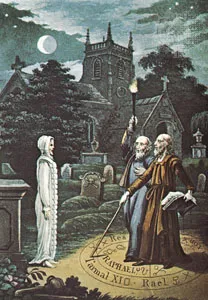
Throughout the annals of history, the belief in ghosts has been a persistent and pervasive phenomenon across cultures and epochs. These ethereal entities, often considered the spirits of the deceased, have captivated human imagination, inspired folklore, and influenced religious and spiritual practices. The concept of ghosts is not merely a product of superstition or fear; it is a reflection of humanity’s enduring fascination with the afterlife and the unknown. This article delves into the historical perspective of ghosts, exploring their significance in various cultures and how they have shaped human history.

Ancient Civilizations and the Supernatural

In ancient civilizations, the belief in ghosts was deeply intertwined with religious and spiritual beliefs. The Egyptians, for instance, had an elaborate concept of the afterlife, believing that the soul, or ka, could return to the world of the living if not properly mummified and provided with offerings. This belief led to the development of intricate burial practices and the construction of monumental tombs and pyramids.

Similarly, the ancient Greeks and Romans had their own notions of ghosts. The Greeks believed in shades, or psychai, which were the spirits of the dead that resided in the underworld. However, under certain circumstances, these spirits could return to the world of the living, as depicted in Homer’s Odyssey, where Odysseus encounters the ghost of his mother in the underworld.

The Role of Ghosts in Medieval Europe

During the Middle Ages, Europe was steeped in a rich tapestry of ghost stories and legends. The Christian Church played a significant role in shaping the perception of ghosts, often associating them with purgatory or as souls in need of prayer to move on to the afterlife. The concept of hauntings was also prevalent, with many believing that ghosts could return to seek vengeance or to warn the living of impending doom.

One of the most famous medieval ghost stories is that of the Wandering Jew, a legend that emerged in the 13th century. It tells of a Jew who mocked Jesus on the way to the crucifixion and was cursed to walk the earth until the Second Coming. This tale reflects the anti-Semitic sentiments of the time and illustrates how ghost stories could be used to convey moral lessons or to reinforce societal norms.

Ghosts in the Age of Enlightenment

The Age of Enlightenment, a period characterized by a focus on reason and scientific inquiry, saw a shift in the perception of ghosts. While some dismissed ghosts as superstitions, others sought to investigate them through a more empirical lens. The rise of spiritualism in the 19th century, particularly in the United States and Europe, brought a renewed interest in communicating with the dead through séances and mediums.

This movement was fueled by the Fox sisters in 1848, who claimed to have made contact with the spirit of a murdered man in their family home. The spiritualist movement gained popularity, with many people seeking solace in the belief that they could communicate with deceased loved ones. Despite skepticism and exposure of fraudulent mediums, the fascination with ghosts and the afterlife continued to grow.

Modern Perspectives on Ghosts

In the modern era, the belief in ghosts remains a significant aspect of popular culture, with countless books, movies, and television shows dedicated to the supernatural. Paranormal investigation has become a popular hobby, with enthusiasts using technology to search for evidence of ghostly activity.

While science has yet to provide concrete evidence of ghosts, the belief in them persists. Psychologists and anthropologists suggest that the belief in ghosts fulfills a psychological need, offering explanations for the unexplainable and providing a sense of connection with the deceased.

Conclusion

The history of ghosts is a testament to humanity’s enduring fascination with the afterlife and the unknown. From ancient civilizations to the modern age, ghosts have played a significant role in shaping cultures, influencing beliefs, and inspiring stories. Whether considered as spirits of the dead, manifestations of the human psyche, or simply a product of our collective imagination, ghosts continue to haunt our history and our present.