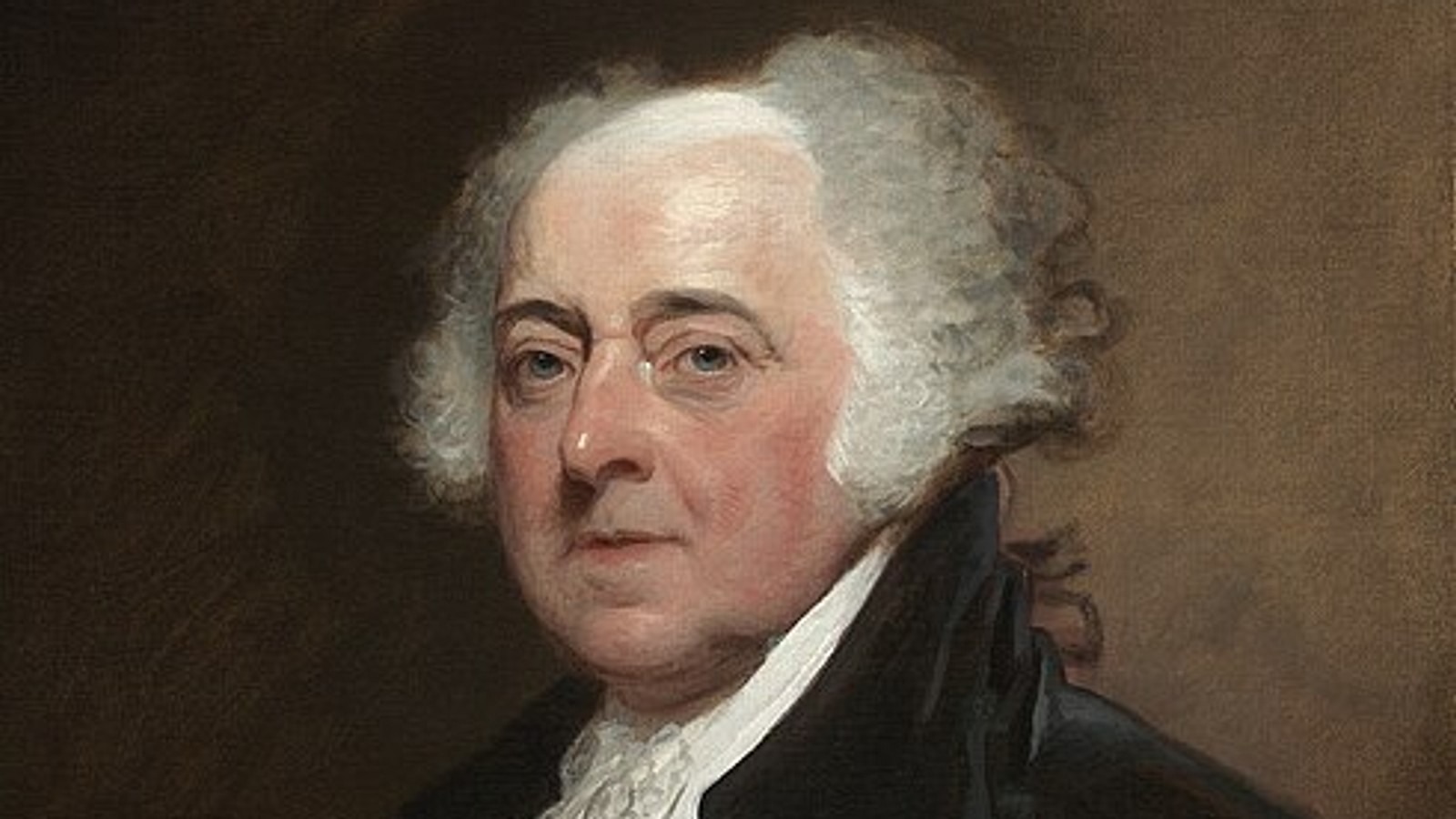
quartetoolinda.com – John Adams, the second President of the United States, served from 1797 to 1801. A key figure in the American Revolution and a dedicated statesman, Adams played an instrumental role in shaping the early republic. His presidency was marked by diplomatic challenges, domestic strife, and a commitment to preserving peace, even at personal political cost.
Early Life and Revolutionary Leadership
Born on October 30, 1735, in Braintree, Massachusetts, John Adams was a lawyer and political philosopher before becoming a central figure in the American Revolution. He was a delegate to the Continental Congress and played a key role in drafting the Declaration of Independence. Adams later served as a diplomat in Europe, helping to negotiate the Treaty of Paris, which ended the Revolutionary War. His extensive public service and commitment to the cause of American independence made him a natural successor to George Washington.
The Election of 1796
John Adams was elected president in 1796, succeeding George Washington. His victory marked the first contested presidential election in U.S. history, as Adams represented the Federalist Party, while Thomas Jefferson ran as the candidate of the Democratic-Republicans. The election showcased the emerging political divisions within the new nation. Adams won the presidency by a narrow margin, and Jefferson became his vice president due to the original electoral system, which awarded the vice presidency to the runner-up.
Challenges of Adams’ Presidency
Adams’ presidency was dominated by foreign policy issues, particularly the strained relations with France following the signing of the Jay Treaty with Britain in 1795. The French viewed the treaty as an alliance between the United States and Britain, which led to the Quasi-War, an undeclared naval conflict between the U.S. and France from 1798 to 1800.
- The XYZ Affair: One of the most significant events of Adams’ presidency was the XYZ Affair. In 1797, French diplomats demanded bribes from American envoys before negotiating to resolve tensions. This incident outraged the American public and led to anti-French sentiment, with cries of “Millions for defense, but not one cent for tribute!” Though war seemed imminent, Adams resisted calls for full-scale conflict, preferring to seek diplomatic solutions.
- The Alien and Sedition Acts: In response to the growing threat of war and internal dissent, Adams signed the Alien and Sedition Acts in 1798. These laws, passed by the Federalist-controlled Congress, were aimed at curbing criticism of the government and limiting the influence of foreign nationals. The Sedition Act, in particular, was highly controversial, as it criminalized speech critical of the president and the government, leading to accusations that Adams was undermining civil liberties and suppressing free speech.
- Peace with France: Despite pressure to go to war, Adams worked tirelessly to avoid a full-scale conflict with France. In 1800, he sent a second peace delegation to France, which successfully negotiated the end of hostilities with the signing of the Convention of 1800. This diplomatic victory averted war but came at a significant political cost, as it angered many in his own Federalist Party who had favored a more aggressive stance.
The Election of 1800
Adams faced a difficult re-election campaign in 1800, as political divisions deepened between the Federalists and the Democratic-Republicans. The Federalists were divided over Adams’ refusal to wage war with France, while Jefferson’s Democratic-Republicans capitalized on public dissatisfaction with the Alien and Sedition Acts. The election resulted in a bitter contest, which ultimately saw Jefferson defeat Adams in a close and highly contested race. The election of 1800 is often referred to as the “Revolution of 1800,” as it marked the first peaceful transfer of power between rival political parties in U.S. history.
Adams’ Legacy
Although Adams’ presidency was fraught with challenges, his commitment to avoiding war with France and maintaining peace is considered one of his greatest achievements. His decision to prioritize diplomacy over conflict likely spared the young nation from a costly and potentially devastating war. However, his support for the Alien and Sedition Acts tarnished his legacy and contributed to his defeat in 1800.
Despite these controversies, Adams’ contributions to the founding of the United States cannot be overstated. As a political thinker and statesman, he helped shape the country’s early institutions and laid the groundwork for its future democratic government. His devotion to the principles of liberty and independence, as well as his service to the country, have earned him a place as one of the most important figures in American history.
Conclusion
John Adams’ presidency was marked by intense political division, foreign policy challenges, and internal strife. While his administration faced criticism, particularly over the Alien and Sedition Acts, Adams’ steadfast commitment to peace with France and his role as a founding father left a lasting impact on the nation. His presidency set important precedents for the peaceful transition of power and highlighted the complexities of leading a new republic.