The Evolution of Disney Princesses: From Crowns to Courage

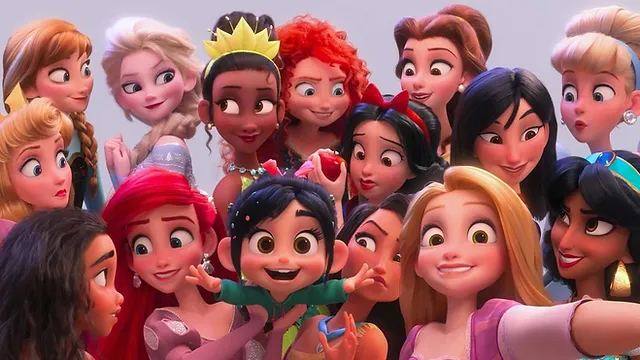
Once upon a time, Disney princesses were the epitome of grace, beauty, and the dream of being swept off their feet by a charming prince. However, as the years have passed, the narrative of these iconic characters has evolved significantly, reflecting broader societal changes and a shift in the values that are celebrated in storytelling for children. This evolution is not just about the characters themselves but also about the messages they convey to young audiences around the world.

The Early Years: Grace and Romance

The first Disney princess, Snow White, introduced in 1937, set the stage for what a princess should be: kind, beautiful, and in need of rescue. This theme continued with Cinderella (1950) and Sleeping Beauty (1959), where the central plot often revolved around the love interest and the happily ever after that came with it. These early princesses were characterized by their beauty, grace, and the patience with which they awaited their princes.

The 1980s and 1990s: A Shift in Narrative

The 1980s and 1990s marked a significant shift in the portrayal of Disney princesses. Beginning with The Little Mermaid (1989), Ariel was introduced as a character who actively pursues her dreams, even against her father’s wishes. This theme of independence and self-determination continued with characters like Belle in Beauty and the Beast (1991), who challenges gender norms and values intelligence over appearance, and Jasmine in Aladdin (1992), who refuses to be defined by her role as a princess and seeks true love rather than a marriage of convenience.

The 21st Century: Courage and Diversity

As the 21st century dawned, Disney took bold steps to further evolve the concept of what a princess could be. Films like Mulan (1998) and Pocahontas (1995) had already begun to introduce non-European princesses with stories rooted in their cultures, but the new millennium brought even more diversity and depth to the princess lineup.

Princess Tiana from The Princess and the Frog (2009) was the first African American Disney princess, and her story focused on ambition, hard work, and the pursuit of her dreams, rather than a prince. Merida from Brave (2012) broke the mold even further, rejecting the idea of marriage and instead focusing on her relationship with her mother and her desire for control over her own destiny.

Moana (2016) took this evolution to new heights. While not officially a Disney princess, Moana is a strong, determined young woman who goes on an epic journey to save her people, driven by a sense of duty and her own innate sense of adventure. Her story is one of self-discovery and courage, with no romantic subplot to distract from her mission.

The Future of Disney Princesses

The evolution of Disney princesses from passive characters waiting for rescue to strong, independent figures carving their own paths is a reflection of changing societal values. It’s a recognition that young girls and boys alike need role models who embody bravery, intelligence, and determination.

As Disney continues to introduce new characters and reimagine old stories, it’s clear that the future of Disney princesses will continue to be about more than just crowns and romance. It will be about courage, resilience, and the power of believing in oneself. From crowns to courage, the journey of Disney princesses is a testament to the enduring appeal of stories that inspire and empower.

In conclusion, the evolution of Disney princesses is a fascinating journey that mirrors broader societal changes. From characters who once embodied traditional notions of femininity and romance to those who are independent, strong, and diverse, Disney princesses have come to represent a wide range of values and aspirations. This evolution is not just a reflection of changing times but also a powerful tool for inspiring young audiences around the world to dream big and believe in their own abilities to shape their destinies.

From the 1990s to Today: The Evolution of K-pop

K-pop, short for Korean pop, has evolved dramatically since its inception in the 1990s, transforming from a niche genre into a global phenomenon that captivates millions of fans worldwide. This evolution is not just a story of musical innovation but also a reflection of South Korea’s changing cultural landscape and its ambition to become a leading soft power on the global stage.

The 1990s: The Birth of K-pop

The roots of K-pop can be traced back to the 1990s, a period marked by the emergence of the first-generation K-pop groups. These groups, such as Seo Taiji and Boys, broke away from the traditional trot and ballad genres that dominated the South Korean music scene, introducing a fusion of hip-hop, rap, and dance music. Seo Taiji and Boys, in particular, are credited with revolutionizing the Korean music industry with their debut in 1992, introducing a new style of music and performance that laid the groundwork for what would become K-pop.

The 2000s: Global Expansion

The 2000s saw K-pop’s evolution into a more polished and diverse genre, with the rise of second-generation groups like Big Bang, Girls’ Generation, and 2PM. This era was characterized by the strategic incorporation of various musical styles, including R&B, electronic dance music, and even rock, into the K-pop formula. The music videos became more elaborate, and the choreographies more complex, setting the stage for K-pop’s global expansion.

The mid-2000s also marked the beginning of K-pop’s international outreach, with groups starting to tour in other Asian countries and even holding concerts in the United States and Europe. The Korean Wave, or Hallyu, began to gain momentum, with K-pop as one of its leading components.

The 2010s: The Global Breakthrough

The 2010s were a defining decade for K-pop, witnessing its transformation into a global phenomenon. Third-generation groups like BTS, EXO, Blackpink, and Twice not only dominated the South Korean music charts but also made significant inroads into the American and European markets. BTS, in particular, achieved unprecedented success, becoming the first K-pop group to enter the Billboard 200 chart and eventually topping it, breaking numerous records along the way.

This era was marked by the strategic use of social media and digital platforms, which played a crucial role in expanding K-pop’s global reach. Fan engagement became more direct and interactive, with fans from all over the world connecting through shared interests and online communities.

Today: A New Era of Innovation and Diversity

As we move into the 2020s, K-pop continues to evolve, with fourth-generation groups like ITZY, Stray Kids, and Aespa pushing the boundaries of the genre. The music is more experimental, incorporating elements of EDM, trap, and alternative R&B, while the visuals and storytelling in music videos have become more sophisticated and cinematic.

The global K-pop community has also become more diverse, with international fans playing an increasingly active role in the genre’s development. K-pop companies are now looking beyond Korea, collaborating with international artists and producers to create music that resonates with a global audience.

Moreover, K-pop’s influence extends beyond music, impacting fashion, beauty, and even language, with terms like “aegyo” and “oppa” entering the global lexicon. K-pop has become a cultural force, symbolizing South Korea’s soft power and its ability to connect with people across the globe.

Conclusion

The evolution of K-pop from the 1990s to today is a testament to its resilience, adaptability, and global appeal. From its humble beginnings as a local genre to its current status as a global phenomenon, K-pop has continuously reinvented itself, reflecting the changing tastes and aspirations of its fans. As it continues to evolve, K-pop’s impact on the global music industry and popular culture is set to grow, making its story one of the most fascinating chapters in the history of music.